Best Spaced Repetition App in 2026: From Anki to MANA Learn (Migration Guide)
In early 2026, a post about Anki's creator went quietly viral across several learning communities. The story: Damien Elmes has maintained Anki — one of the most effective learning tools ever built — largely on his own for nearly twenty years. Medical students have passed their boards with it. Chess players have memorized opening theory. Pilots have drilled emergency procedures. Language learners have built vocabulary lists that would fill a dictionary.
The reaction wasn't mockery. It was something closer to reverence mixed with unease. Reverence because a single developer maintained something that genuinely changed how people learn. Unease because that same single-developer origin explains something users have quietly complained about for years: Anki is powerful, but it was never designed to be intuitive. The mobile sync requires AnkiWeb. The desktop UI looks like it was built in 2006 (because it largely was). Add-ons break with version updates. And for language learning specifically — the highest-volume Anki use case — the flashcard model is starting to show limits that AI can now address.
If you're an Anki user thinking about switching, or a learner who was always too intimidated to start with Anki and wants a modern spaced repetition app instead, this guide is for you. We'll explain exactly what spaced repetition is, what Anki does brilliantly, where it genuinely struggles, and how MANA Learn's approach handles the gaps.
Disclosure: MANA Learn is a free AI-powered language learning app, built by Tokyo Rangers K.K. in Japan. We built this guide because spaced repetition is the scientific core of how our learning system works — our curriculum design team spent months studying SRS research and auditing how existing apps (including Anki) implement it before building MANA's adaptive scheduling. We think learners deserve a clear-eyed comparison rather than a marketing pitch, so we've included specific limitations of our own product alongside Anki's.
What Spaced Repetition Actually Does (And Why It Works)
Spaced repetition is not a flashcard trick. It's a scheduling system built on a specific piece of cognitive science: the spacing effect, documented by Hermann Ebbinghaus in 1885 and confirmed by over a century of memory research. The core finding is straightforward — you remember things longer when you review them at expanding time intervals than when you review them repeatedly in a single session.
The practical translation: if you learn a word today, reviewing it tomorrow, then in four days, then in ten days, then in three weeks will lock it into long-term memory far more efficiently than reviewing it ten times today. A 2008 study by Cepeda et al. in Psychological Science found that spacing study sessions with a gap equal to roughly 10–20% of the intended retention period produced the best long-term recall — so if you want to remember something for a year, an initial review gap of about 3–6 weeks is optimal. Cramming works for next week's test. Spaced repetition works for the rest of your life.
The algorithm that Anki uses (a derivative of SM-2, developed by Piotr Woźniak in 1987) calculates a personalized schedule for each card based on how confidently you recalled it. Rate yourself "hard" and it comes back soon. Rate yourself "easy" and it won't reappear for weeks or months. Over time, the system builds a complete picture of your memory and allocates your study time to the cards that are about to slip — not the ones you already know well.
This is why Anki users sound almost evangelical about it. The algorithm is real, the research is solid, and if you use Anki consistently, you will retain vocabulary at a rate that passive review or simple repetition cannot match.
What Anki Does Extremely Well
Before talking about alternatives, this is worth saying plainly: Anki is one of the most effective learning tools ever created for certain use cases. Specifically:
Custom deck building. Anki gives you complete control over what you learn. Medical students build decks from their textbooks, lecture notes, and high-yield question banks. The r/medicalschoolanki community alone has over 500,000 members and hosts shared decks with millions of cards — including Anking, a curated deck used by a substantial portion of US medical students. This level of customization is essentially impossible in most consumer apps.
Community decks. AnkiWeb hosts thousands of shared decks — JLPT vocabulary lists, medical terminology, bar exam concepts, language verb conjugations. For many learners, a pre-built community deck is good enough to start immediately without building cards from scratch.
Proven algorithm. The SM-2 algorithm has two decades of real-world validation. Anki works for the people who use it consistently. A 2016 study published in npj Science of Learning found that spaced practice produced retention rates 20–30% higher than massed practice in vocabulary learning tasks. Anki's implementation of this is not marketing — the data on that is not ambiguous.
Cross-platform sync (with setup). AnkiWeb provides cloud sync across desktop, iOS (AnkiMobile, paid), and Android (AnkiDroid, free). The setup takes some effort, but once it's working, your progress follows you.
Where Anki Shows Its Limits for Language Learning
The viral post about Anki's one-developer history raised a real tension: the app's depth comes partly from its age, and its age is exactly what makes it feel foreign to learners who expect modern software behavior.
The card creation problem. For language learning, building a useful Anki deck is itself a project. You need to find or create cards for the vocabulary you want to learn, add audio (usually manually or via add-ons like AwesomeTTS), decide on card formats (Basic, Cloze, or custom note types), and then maintain the deck as your level progresses. A typical JLPT N3 vocabulary deck requires 3,000+ cards; building it from scratch at a realistic pace of 20 cards per hour takes 150+ hours before you've studied a single word. The time investment before you can start studying is significant. Many learners abandon Anki before they finish building their first deck.
Context collapse. Anki flashcards are, by design, decontextualized. A card shows you a word or phrase; you recall it or you don't. This is excellent for encoding discrete facts. It's less effective for building the kind of contextual understanding that lets you use a word correctly in a sentence you've never seen before. Language fluency requires both.
No adaptive difficulty. Anki schedules when you review cards, but it doesn't change what it teaches you based on your overall progress. If you're an advanced learner who has a gap in a specific grammar pattern, Anki won't detect that and fill it. You study what you put in the deck, in the sequence the algorithm schedules — no more.
The mobile experience gap. AnkiDroid is free and functional. AnkiMobile on iOS costs $25 — a deliberate funding model for a volunteer-maintained project, but a real friction point for learners who primarily study on iPhone. And neither mobile app has the polished UX that learners in 2026 expect from a daily-use app.
No conversational practice. A flashcard can help you recognize a word. It cannot help you use it in a conversation. This is the hardest limitation to work around in Anki — there are add-ons and workarounds, but the core system was built for recognition recall, not production fluency.
How MANA Learn Handles Spaced Repetition Differently
MANA Learn is not a flashcard app that added AI features. It's an AI-first learning system that uses spaced repetition as one layer of a broader adaptive engine. Here's what that means practically:
AI-Scheduled Review, No Manual Card Building
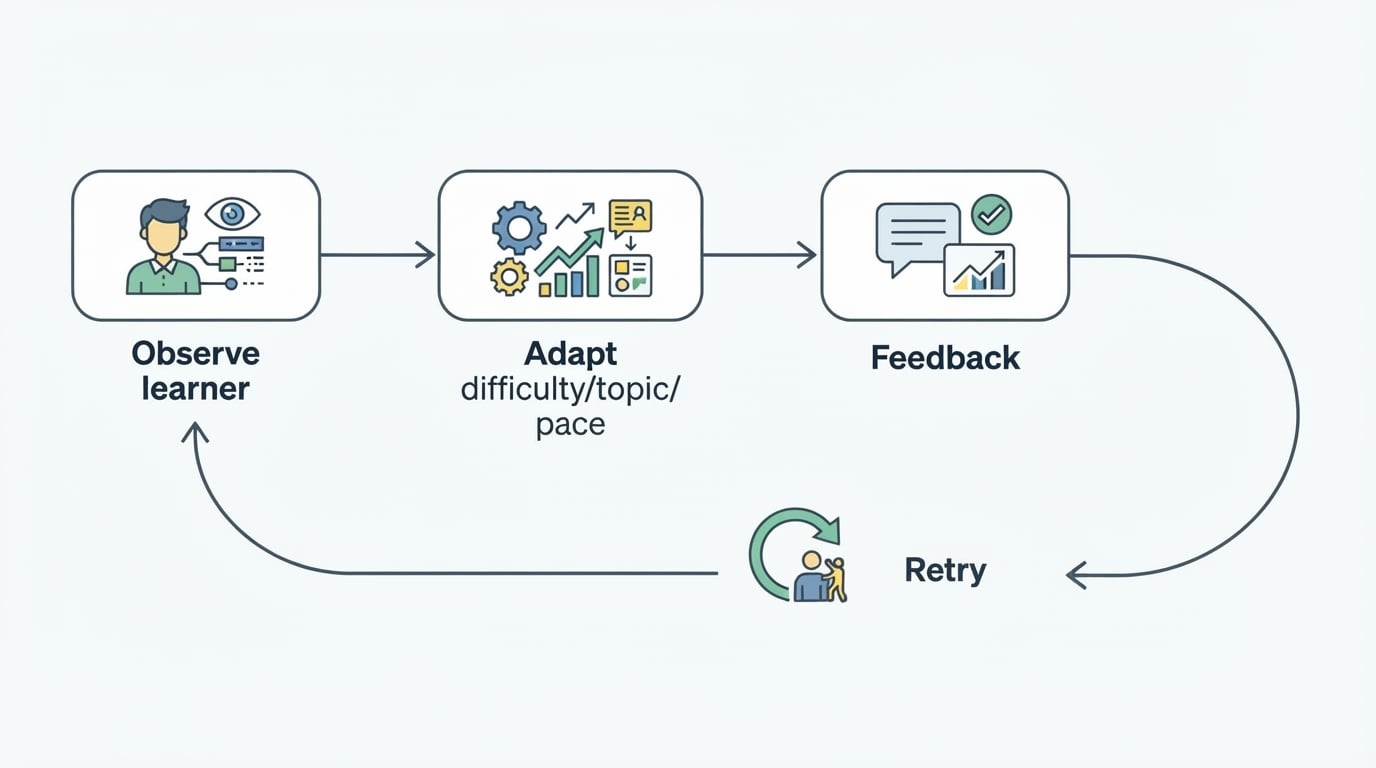
MANA's AI learns from your performance in real time and schedules review automatically. You don't build a deck. The system observes which vocabulary and grammar patterns you're struggling with and surfaces them at the right intervals. The spaced repetition logic is running in the background; you experience it as lessons that feel appropriately challenging without ever being overwhelming.
For learners who wanted Anki's algorithm but dreaded the card-building overhead, this is the direct solution.
Context-First Learning
Vocabulary in MANA Learn is learned in context — inside micro-lessons built around real-world scenarios like travel conversations, workplace exchanges, and everyday social situations. When the spaced repetition system brings back a word for review, it brings it back inside a context, not as an isolated flashcard.
This matters because recognition and production are different skills. You can recognize "serendipity" on a flashcard and still blank on it in conversation. Learning vocabulary in scenarios from the start builds the contextual encoding that makes words actually usable.
The Bilingual Flashcard Tool
For learners who want a traditional flashcard experience alongside their MANA lessons, MANA's free Bilingual Flashcard Generator is available separately. You enter vocabulary, select your language pair, and get formatted bilingual cards you can review, copy, or export. No account required. It handles multiple language directions — English–Japanese, Chinese–Japanese, and more — which covers the core use case for most Anki language deck users.
This isn't a replacement for Anki's full deck system. It's a lightweight tool for learners who occasionally want to create flashcard sets without managing a full SRS application.
CEFR-Aligned Curriculum: No Level Ceiling
One limitation of self-built Anki decks is that they only go as far as the materials you put into them. Most community language decks top out around intermediate level. MANA's curriculum is structured against the full CEFR framework — A1 through C2 — which means the app can accompany you from absolute beginner to advanced proficiency without requiring a different tool at each stage.
Completely Free
Anki desktop is free. AnkiDroid is free. AnkiMobile is $25. MANA Learn is free across iOS, Android, and web — no paid tier, no energy system, no premium paywall on AI features. The personalized AI tutor, the adaptive scheduling, the conversation practice, and the vocabulary tools are all available from day one without a subscription.
Migrating from Anki: What to Expect
If you've been using Anki for language learning and are considering a switch, here's a realistic picture of what the transition involves.
What carries over. The vocabulary you've already memorized through Anki is in your head — that doesn't disappear. Your established study habits (daily practice, reviewing new words in context) will transfer directly. MANA's AI will quickly calibrate to your actual level based on your early lesson performance.
What doesn't carry over. Your Anki card history and scheduling data won't import into MANA Learn — the systems are fundamentally different. You won't be able to pick up exactly where your Anki intervals left off. The practical impact for most language learners is smaller than it sounds: MANA's AI recalibrates to your level within the first few sessions, so you won't spend weeks reviewing content you already know well.
What you gain. Conversation practice, scenario-based learning, CEFR-graded progression, and zero card-maintenance overhead. The AI handles the scheduling logic that you previously managed manually through Anki's configuration settings.
What you might miss. Anki's custom deck freedom is genuinely hard to replicate. If you were using Anki for something other than language learning — medical licensing, law, history — MANA Learn is a language-specific app and won't replace those use cases. If you had a highly specialized deck (niche vocabulary, custom card formats, audio files you recorded yourself), that content doesn't have a direct import path.
The recommended approach. For most language learners, the easiest transition is parallel running: continue any critical Anki review sessions while starting fresh with MANA Learn. Let MANA's AI build your vocabulary base through contextual learning. Within the first two weeks of regular MANA sessions (typically 15–20 minutes/day), most learners find the Anki sessions naturally taper as the MANA system begins surfacing the same vocabulary in more useful contexts. We've seen users who kept their Anki "maintenance" sessions down to zero by week three — not because they deleted the app, but because they no longer felt the gap.
Who Should Stay on Anki
MANA Learn is a language learning app. Anki is a general-purpose spaced repetition tool. These are different products. If you're using Anki for:
- Medical or nursing board prep (USMLE decks, NBME content)
- Bar exam memorization
- Any subject outside of language learning
- A highly customized deck you've spent years refining
Stay on Anki. The flexibility and community resources for those use cases are unmatched.
If your primary use is language learning — and particularly if you've found yourself spending more time managing Anki than studying in it — MANA Learn is worth a try. It's free, so the cost of testing is low.
The Broader Shift Happening in Spaced Repetition Apps
The Anki story resonated because it sits at a crossroads moment in learning technology. For two decades, the best spaced repetition tool was a desktop app maintained by one developer. The algorithm was so good, and the need so real, that people tolerated significant UX friction to access it.
That calculus is changing. AI systems can now do things the SM-2 algorithm was never designed to do: detect when you're confusing two similar words, notice that your listening comprehension is lagging behind your reading comprehension, generate new practice sentences on the fly for vocabulary you just learned, and adapt the content of lessons — not just the timing of reviews.
Spaced repetition isn't going away. The core science — review at expanding intervals — is as valid as it was when Ebbinghaus described it in the 19th century. But the best implementations in 2026 are wrapping that science in systems that also build conversational ability, contextual understanding, and adaptive curriculum progression.
MANA Learn is built on that foundation. If you've been an Anki user looking for what comes next in AI-powered language learning, download MANA Learn free and try it.
MANA Learn is a completely free AI language learning app available on iOS, Android, and web. No subscriptions, no paywalls, no energy limits.