Best Language Learning Apps Free: How to Choose a Free Language Learning App That Actually Fits
Searching for the best language learning apps free usually means one thing: you want real progress without locking into another monthly subscription on day one. That demand is why people compare freemium tools, dig for free language learning apps without subscription, and ask which free language apps feel better than streak-only practice.
This guide is a practical free language learning app comparison for US learners. It is not a shallow top-10 dump. You will get a decision framework for what “free” really includes, side-by-side criteria that matter (speaking, listening, vocabulary, grammar, offline use, and language coverage), sourced notes on mainstream options people actually try, and a clear read on when a comprehensive path—such as MANA Learn—is a better fit than gamified drills alone.
Evidence note (how this page was built): product claims below are tied to public product or reference pages checked for this rewrite. Free-tier gates change by platform, account age, and region—always re-verify inside the app after install. Where a vendor does not publish a full free-vs-paid matrix on the marketing page, that uncertainty is stated explicitly.
What “free” means in language apps (read this before you download)
Most apps are freemium, not unlimited free forever. Before you commit, separate four layers:

- Always-free core — lessons you can keep using without paying.
- Soft limits — hearts/energy, daily caps, locked practice modes, ads, or delayed reviews.
- Free trial of premium — temporary full access that expires.
- Paid unlocks — offline packs, advanced speaking tools, certificates, ad removal, or full course trees.
If your goal is free language learning apps without subscription, prioritize apps where the free path still covers daily lessons plus at least one production skill (speaking or writing), not only recognition drills.
A useful rule: if the free tier only lets you “start,” treat it as a trial—not a long-term free plan.
A quick freemium map (evidence-backed, not a ranking)
| App | Public free-path signal | What you should still verify in-app |
|---|---|---|
| Duolingo | Long-running freemium model: core lessons free with ads; paid Super/Max layers for ad removal, unlimited retries, and AI features (overview) | Current heart/energy rules, which practice modes stay free, offline packs |
| Memrise | “Start learning for free”; paid plan “unlocks extra features”; positions native-speaker video + AI speaking | Which decks, review tools, and AI speaking remain free after week 1 |
| Busuu | “Learn for free” entry points; Premium plans exist; markets compact lessons + community practice | Community corrections, full grammar units, offline access vs Premium |
| Babbel | Explicit sample path: first lesson of every course free; up to 80 free lessons depending on language, then subscription | Whether your target language is near the low or high end of that free sample |
| MANA Learn | Positions as a free AI language tutor (“learn smarter, not harder”) with adaptive/comprehensive-path framing on its content hub | Live free-tier depth, languages, speaking loops, and any paid gates on the product surface |
Decision framework: pick by job-to-be-done, not by hype
Use the same five criteria for every app. Score each option 1–5 for your situation.
| Criterion | What to check in the free tier | Why it matters |
|---|---|---|
| True free depth | Can you keep learning after week 1 without paying? | Stops “bait-and-switch” frustration |
| Speaking practice | Pronunciation checks, dialogues, AI conversation, or community feedback | Builds usable speech, not only reading |
| Skill balance | Listening, vocab, grammar, reading/writing mix | Prevents one-dimensional progress |
| Beginner on-ramp | Clear first units, guided path, low friction | Critical for first-time learners |
| Long-term path | Spaced review, goals (travel/work/exam), offline options | Determines whether you stay past the honeymoon |
Scenario shortcuts
- Busy beginner: short daily lessons + gentle onboarding + review system.
- Speaking-first learner: prioritize pronunciation feedback and conversation practice in free or low-friction modes—this is the filter for best language learning apps for speaking free.
- No-subscription seeker: reject apps where free is only a short sample of paid courses.
- Travel / real-life phrases: prefer native-speaker media and situational content over pure game loops.
- Want a comprehensive path: look for an integrated route across skills (input + output + review), not only gamified streaks—this is where MANA Learn’s positioning is meant to compete.
Streaks keep you opening the app. A comprehensive path keeps you improving across listening, speaking, and usable phrases. When you evaluate any “all-in-one” free language learning app, demand proof of that integration in the free experience—not just marketing language.
Comparison criteria checklist (use this while testing)
Spend 20–30 minutes in each free language learning app and answer:
- After five lessons, can I say or write something new?
- Is speaking optional fluff or a real practice loop?
- Do I hit a paywall on core progress or only on convenience features?
- Is review automatic (spaced repetition) or easy to skip forever?
- Does the content match my goal (travel phrases, work small talk, exam vocab, family conversation)?
- Can I continue offline for commute/plane time, or is that paid-only?
- How many languages matter to me—and is my target language fully built, not a stub?

If an app fails #1 and #3, it is entertainment with language flavor—not a study system.
Reproducible 30-minute bake-off (copy this into a notes app)
| Minute | Action | Pass signal |
|---|---|---|
| 0–5 | Install, create account, set one goal (e.g., “order food,” “self-intro”) | Goal is stored and used to route content |
| 5–15 | Complete 3–5 free lessons without paying | You can produce 5+ new phrases aloud |
| 15–22 | Force a speaking/listening-only block | Output practice is available without upgrade nag |
| 22–27 | Trigger review / mistake path | Old items return; feedback explains why |
| 27–30 | Open settings: offline, ads, Premium upsell | You know what stays free for 30+ days |
Write kill criteria before you install (example: “no free speaking in week 1,” “paywall on core unit 2,” “no review system”). Rankings without your samples are entertainment; rankings with your samples are a real choice.
Mainstream free and freemium options learners actually compare
Below are established options with different free models, plus MANA Learn as a comprehensive-path candidate. Details change by platform and region, so verify inside the app after install.
Duolingo — the default free benchmark (habit first)
Duolingo is still the reference point for most best language learning apps free searches. Public reference summaries describe a freemium product launched from a 2011 private beta / 2012 public release, short gamified lessons, spaced-repetition-style review, and paid tiers historically framed as Super (ads off, unlimited retries, extra lesson types) and Max (generative AI features such as Roleplay) ( Duolingo overview ). Investor materials publish quarterly results on a regular cadence ( Duolingo Investor Relations ); treat live MAU/subscriber figures as time-sensitive and read the latest shareholder letter when you need hard numbers.
What the evidence supports
- Strength is habit formation: micro-lessons, streaks, leagues, and low setup friction.
- Free path is real enough that many learners stay for months—but soft limits (ads, energy/hearts, locked modes) are part of the model, not a bug.
- Independent and company-linked studies summarized in public references are mixed by population and skill: some adult reading/listening outcomes look competitive with classroom benchmarks in specific study designs; other work finds limited grammar gains. Use studies as context, not as a promise that your free streak equals fluency.
Best for: beginners and returning learners who need a low-friction daily loop.
Watch-outs: if your complaint is “200-day streak, still panic in conversation,” you need more output practice—not a harsher game. Confirm current free limits yourself; they move often.
Free-tier fit: strong for habit; variable for deep speaking and long-form production without paid AI layers.
Memrise — free start with real-world video and AI speaking
Memrise positions free learning around useful words and phrases, native-speaker videos, smart review, and AI speaking practice. Public messaging emphasizes starting free, learning useful phrases quickly, and building confidence without requiring payment for the core loop; a paid plan unlocks extra features. Product copy has also framed short daily sessions (on the order of ~15 minutes) and early speaking goals such as ordering coffee.
Best for: learners who want phrases that sound natural, not only textbook drills; people comparing free language apps better than Duolingo on “real speech” exposure.
Watch-outs: marketing pages often under-specify which speaking and review tools stay free after the first sessions. Offline packs, if offered, are often premium in this category—check before you rely on them. Memrise has also published product-experience changes on its blog, so UI labels you remember from 2023–2024 may not match the 2026 app.
Free-tier fit: strong if the free path still includes video + review + some speaking after week 1. Weak if AI practice or core decks quickly lock.
Busuu — free lessons plus community practice signals
Busuu markets free learning with compact expert-created lessons and an interactive community. Public messaging emphasizes foundations across speaking, listening, reading, and writing, plus pronunciation feedback and native-speaker video support. It highlights a large global learner community (public pages have cited on the order of 120 million learners) for practice and cultural tips, and lists a multi-language catalog spanning major European and Asian languages (e.g., Spanish, Japanese, French, English, German, Chinese, Korean, and others on the marketing surface).
Best for: learners who want structured lessons and human feedback loops; beginners who like short, goal-based courses.
Watch-outs: free vs Premium feature splits are not always fully listed on marketing pages. Test whether community corrections, full grammar units, and offline access require Premium in your account. Awards (e.g., store “Editors’ Choice” / “App of the Year” style recognition referenced on marketing pages) are trust signals for product polish—not proof your target language’s free tree is complete.
Free-tier fit: promising if community practice and core lessons remain usable without constant upgrades.
Babbel — free sample lessons, then subscription for the full method
Babbel is clearer about limits than most competitors: signup is free, and the first lesson of every course is free, with up to 80 free lessons depending on language, so you can try structure and topics before subscribing. After that, full access requires a paid plan. Babbel emphasizes practical conversation skills, speech recognition, interactive dialogues, and AI conversation practice, and publicly cites scale signals such as over 25 million subscriptions sold.
Best for: learners who value a structured conversation method and are open to paying after a serious trial.
Watch-outs: this is not a lasting free language learning app. Treat Babbel as a high-quality trial-to-paid path, not a no-subscription solution.
Free-tier fit: excellent for evaluation; poor if your hard constraint is free forever.
MANA Learn — comprehensive / adaptive path candidate (free AI tutor positioning)
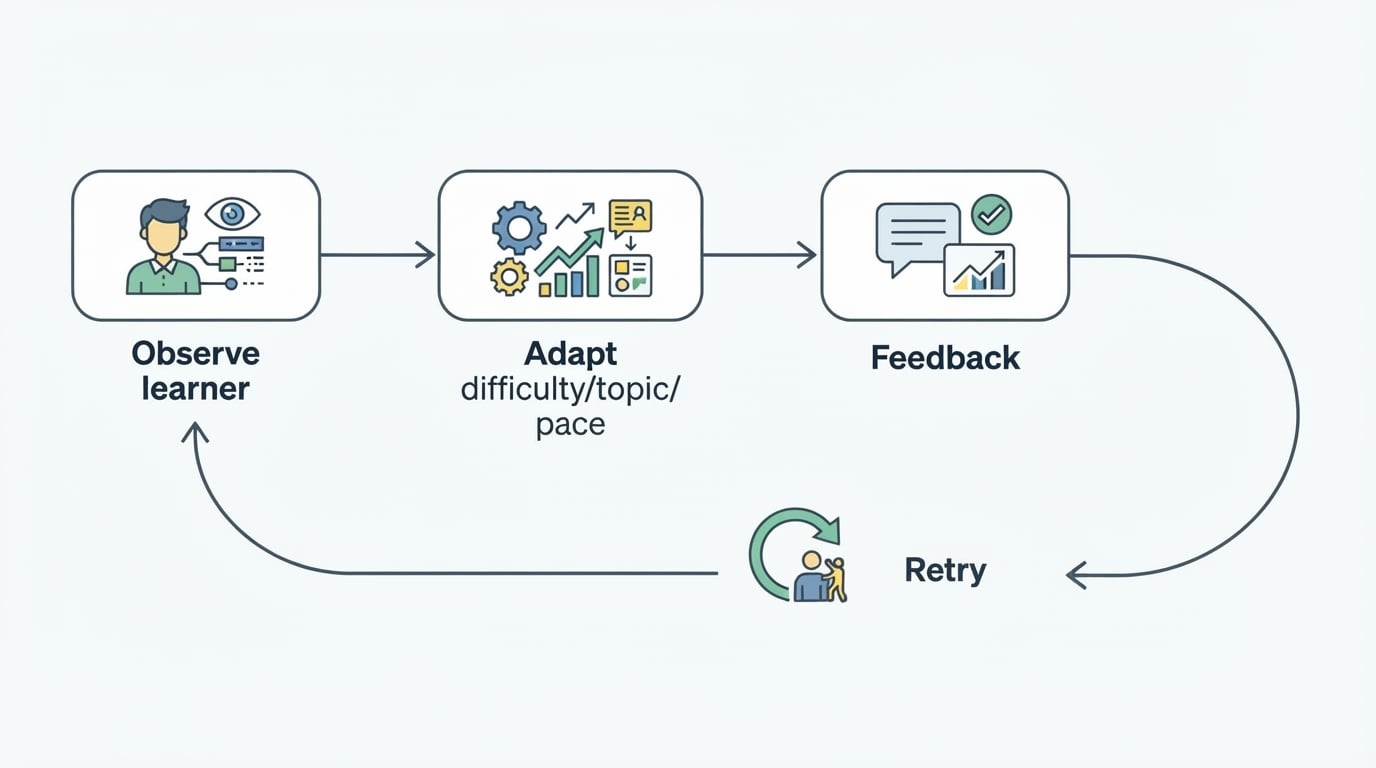
MANA Learn positions itself as a free AI language tutor—“learn smarter, not harder”—and its content hub frames learning around usable vocabulary, flashcards, CEFR-oriented course thinking, and comparisons against habit-first apps. In other words: it is aimed at learners who want an integrated path (goal → practice → output) rather than streak maintenance alone.
How to evaluate MANA Learn without over-claiming
Public product matrices can lag blog positioning. Before you treat any AI tutor as your primary free language learning app, run the same bake-off and demand answers to:
- Diagnosis: Does onboarding measure more than a single placement quiz (vocab, listening, production)?
- Path rewrite: After 3 days of mistakes, does the next unit change—or only repeat wrong items?
- Output ratio: Are you speaking/writing every session, or mostly tapping?
- Free durability: After 14 days, is the core path still free, or did AI conversation lock?
- Goal fit: Can you set travel vs work vs exam and see the syllabus re-prioritize?
Best for: learners comparing top 10 language learning apps who already tried a streak app and want a more comprehensive, adaptive routine; beginners who prefer guided paths over open libraries.
Watch-outs: do not accept slogan-level “AI tutor” claims. Screenshot your free-tier limits on day 1 and day 14. If the product surface and the blog disagree, trust what the installed app allows you to do unpaid.
Free-tier fit: potentially strong for comprehensive study if the free AI path includes ongoing lessons + output practice. Treat live verification as mandatory.
Side-by-side: who should pick what
| If you need… | Stronger free-path direction | Weaker free-path direction |
|---|---|---|
| Ongoing free study | Apps that advertise free start and usable ongoing lessons (verify Duolingo/Memrise/Busuu/MANA Learn in-app) | Babbel after the free lesson sample |
| Speaking confidence | Tools highlighting pronunciation feedback, AI speaking, dialogues, or community corrections | Apps that only do multiple-choice recognition |
| Beginner clarity | Short guided units with clear goals | Open libraries with no path |
| No subscription | Deep free tiers with optional paid convenience | Free trial of a paid method |
| Comprehensive skill path | Balanced input + output + review in one routine (MANA Learn’s intended lane; verify) | Streak-only loops with thin speaking |
Recommended pairing strategy (information-gain play)
Instead of forcing one app to do everything on day one:
- Primary app (daily, 15–20 min): structured lessons + review.
- Speaking block (10 min, 4–5 days/week): pronunciation or conversation practice from the same app if free; otherwise a dedicated speaking mode you can sustain.
- Weekly reality check (20 min): hold a tiny conversation goal—“order coffee,” “introduce my job,” “ask for directions”—and note gaps.
- Upgrade rule: pay only when a specific blocker appears (offline travel week, advanced grammar, unlimited speaking), not because a paywall interrupted a streak.
This keeps you in control of cost while still aiming for a comprehensive learning path.
Best free language learning apps for beginners: a simple 7-day test
Use this completion standard before you “pick a winner.”
Day 1–2: Finish the first unit. Write down 10 phrases you can actually say aloud.
Day 3–4: Do only speaking/listening practice. If the free tier blocks output practice, mark that as a hard fail for speaking goals.
Day 5: Skip a day, then return. Does review bring old items back intelligently?
Day 6: Try offline or low-connectivity use if that matters for your commute.
Day 7: Without looking at the screen translation, produce a 30–45 second self-intro.
Pass criteria for beginners:
- You can produce—not only recognize—basic phrases.
- You know the next lesson without decision fatigue.
- You did not hit a paywall on core progression.
- You still want to open the app on day 8.
Fail any two, and switch. Loyalty to the wrong free language learning app is expensive in time.
Beginner shortlist by constraint (not by brand hype)
| Your constraint | Start here | Why |
|---|---|---|
| Absolute beginner, needs habit | Duolingo free path | Lowest friction onboarding; confirm speaking depth later |
| Wants natural phrases + video | Memrise free start | Native-speaker clips + AI speaking positioning |
| Wants human/community feedback | Busuu free path | Community + multi-skill lesson framing |
| Will pay later for a method | Babbel free sample (up to ~80 lessons) | Clear trial-to-paid contract |
| Wants comprehensive AI path | MANA Learn free AI tutor positioning | Evaluate adaptive path + output ratio with the bake-off |
Free language apps better than Duolingo—for specific jobs
“Better” only makes sense relative to a job:
- Better for real-world phrasing: apps with native-speaker video and situational phrases (Memrise’s public positioning).
- Better for community correction: apps that emphasize native-speaker or peer feedback (Busuu’s public positioning).
- Better for conversation method after a trial: structured paid methods with a free sample (Babbel’s up-to-80-lessons path).
- Better for comprehensive / adaptive study: AI-tutor products that rewrite the path from your errors (MANA Learn’s intended differentiation—verify in product).
- Better for pure free habit building: large freemium apps that minimize setup friction (still verify current limits yourself).
If your complaint is “I have a long streak but panic in real conversations,” you do not need a harsher game. You need more output practice and a weekly production checkpoint.
How to choose in 10 minutes (final selector)
Answer these in order:
- Must it stay free for 3+ months? If yes, eliminate pure trial-to-paid products after you sample them.
- Is speaking a primary goal? If yes, require free pronunciation or conversation loops in week one.
- Beginner or returning intermediate? Beginners need a guided path; intermediates need review + harder output.
- One language deeply or many casually? Deep progress favors structured/adaptive courses; casual browsing favors large free catalogs.
- Will you pay later for offline or advanced speaking? If never, only keep apps whose free tier already matches your must-haves.
Then pick one primary free language learning app for 14 days. Multi-app hopping feels productive and usually stalls progress.
Practical next step
Install two candidates max—for example, one habit-first app (often Duolingo) and one comprehensive-path candidate (MANA Learn, Memrise, or Busuu depending on your speaking/community priority). Run the 7-day beginner test on both. Keep the one that improves your ability to say something real—not the one with the prettiest animations.
If you later outgrow free limits, upgrade the app that already created a habit and measurable speaking gains. That sequence—prove free value, then pay for depth—beats buying a year of Premium before you know your study rhythm.
Source checklist (re-verify before you buy or commit)
- Duolingo product + public reference overview: duolingo.com , Wikipedia summary , investor updates
- Memrise free-start / video + AI speaking positioning: memrise.com
- Busuu free learning + community messaging: busuu.com
- Babbel free first lessons / up to 80 free lessons + subscription method: babbel.com
- MANA Learn free AI language tutor positioning: blog.manamana.ai
A free language learning app earns its place when it turns spare minutes into phrases you can use. Use the framework, pressure-test speaking early, cite what the product actually lets you do unpaid, and treat “comprehensive” as a routine you can sustain across skills—not a slogan on a store page.