Sugoi Ankicho Review 2026: Is This Free Language Learning App Worth Your Study Time?
On April 30, 2026, a study-focused X user named @de_eszh posted about Sugoi Ankicho — a free Japanese memorization app that promises to help learners "instantly memorize large amounts of vocabulary." The post spread fast through #studytwt and #langtwt, picking up thousands of likes as learners piled into the replies, asking whether it really works for Japanese, Korean, Chinese, and English vocabulary.
I downloaded it the same week and spent 7 days testing it during my daily commute. Here's what I found — and why the free language learning app you actually want might not be the one trending on social media.
What Is Sugoi Ankicho?
Sugoi Ankicho (すごい暗記帳) translates to "Amazing Memorization Notebook." It's a free mobile app purpose-built for one job: helping you memorize vocabulary lists by writing, reviewing, and testing yourself on them repeatedly.
The app is genuinely free — no subscriptions, no ad breaks between study sessions. That alone explains the viral reception. In a market where Duolingo locks AI conversations behind $30/month and Busuu's free tier is barely functional, a no‑cost memorization tool feels like a find.
What Surprised Me (the Good)
No sign-up friction. You open the app and start studying immediately. No account creation, no email verification, no "free trial starts now" countdown. This matters — I've abandoned three other language apps this year alone because the onboarding was longer than my actual study session.
Clean, distraction-free interface. The app shows you a word, you think about it, you tap to reveal the answer. No animations, no streaks to maintain, no leaderboards. If cramming 50 vocabulary items before a test is your goal, this directness works.
Tested with real vocabulary sets. I imported 30 JLPT N3 kanji compounds and 20 Korean intermediate verbs. The app handled both without issues — you create a list, and it cycles through them in order.
Where the Hype Meets Reality (the Bad)
But a week of daily use revealed gaps that the trending post didn't mention.
No Spaced Repetition — At All
This was the dealbreaker for me. Sugoi Ankicho uses a fixed-order review cycle: you see word A, then B, then C, then back to A. There's no algorithm tracking which words you answered correctly, which you missed, or when you're likely to forget them.
Compare this to spaced repetition systems (SRS) — the method pioneered by SuperMemo in the 1980s and used today by Anki, Memrise, and most serious learning tools. SRS schedules each review at the moment you're about to forget, which doubles retention compared to fixed review patterns (Cepeda et al., 2006, Psychological Science). Sugoi Ankicho simply doesn't do this.
Practical impact: After day 3, I was reviewing words I already knew while forgetting words from day 1 that never resurfaced. The app doesn't know what you've mastered.
Vocabulary Only ≠ Language Learning
Sugoi Ankicho helps you memorize word lists. That's it. There's no:
- Grammar instruction or sentence structure
- Listening comprehension — no native audio for any word
- Speaking practice — no pronunciation check
- Reading passages or cloze exercises
- Translation lookup when you encounter unfamiliar words outside the app
If your goal is passing a vocabulary test tomorrow, this works. If your goal is understanding a conversation in Japanese or Korean — memorizing words in isolation won't get you there. You need context, grammar, listening exposure, and active recall applied to real situations.
One-Size-Fits-All, No AI Adaptation
The app doesn't adjust to your level. A complete beginner and an advanced learner get the same interface, the same review cadence, the same content. In 2026, when AI‑powered language tools can personalize lessons in real time based on your performance, this feels like using a flip phone in an smartphone era.
Language Coverage Gap
Sugoi Ankicho is built for Japanese learners first. While you can create custom lists for other languages, there are no pre‑built decks for Korean, Chinese, French, Spanish, or other major languages — you're on your own to build everything from scratch.
What the Virality Actually Tells Us
The #studytwt response to Sugoi Ankicho reveals something important: learners are hungry for free tools that actually help them retain vocabulary. The mainstream options — Duolingo's gamified but shallow approach, paid subscriptions that feel overpriced — leave gaps that a simple memorization app can fill.
But the real need isn't "a better flashcard app." It's a free language learning app that combines effective memorization with actual teaching — spaced repetition built into a full curriculum, AI adaptation, and practice across all four skills (reading, writing, listening, speaking).
The Free Alternative That Does More
If Sugoi Ankicho convinced you that free language tools are worth exploring, MANA Learn takes that idea much further.
MANA is a completely free AI‑powered language learning app — no premium tiers, no hidden fees, no ads anywhere. Here's how it compares directly to what Sugoi Ankicho lacks:
Spaced repetition, built into every lesson. MANA's AI schedules reviews based on your actual retention. Words you struggle with reappear more frequently; words you've mastered fade into periodic maintenance. This is the science‑backed approach Sugoi Ankicho doesn't offer.
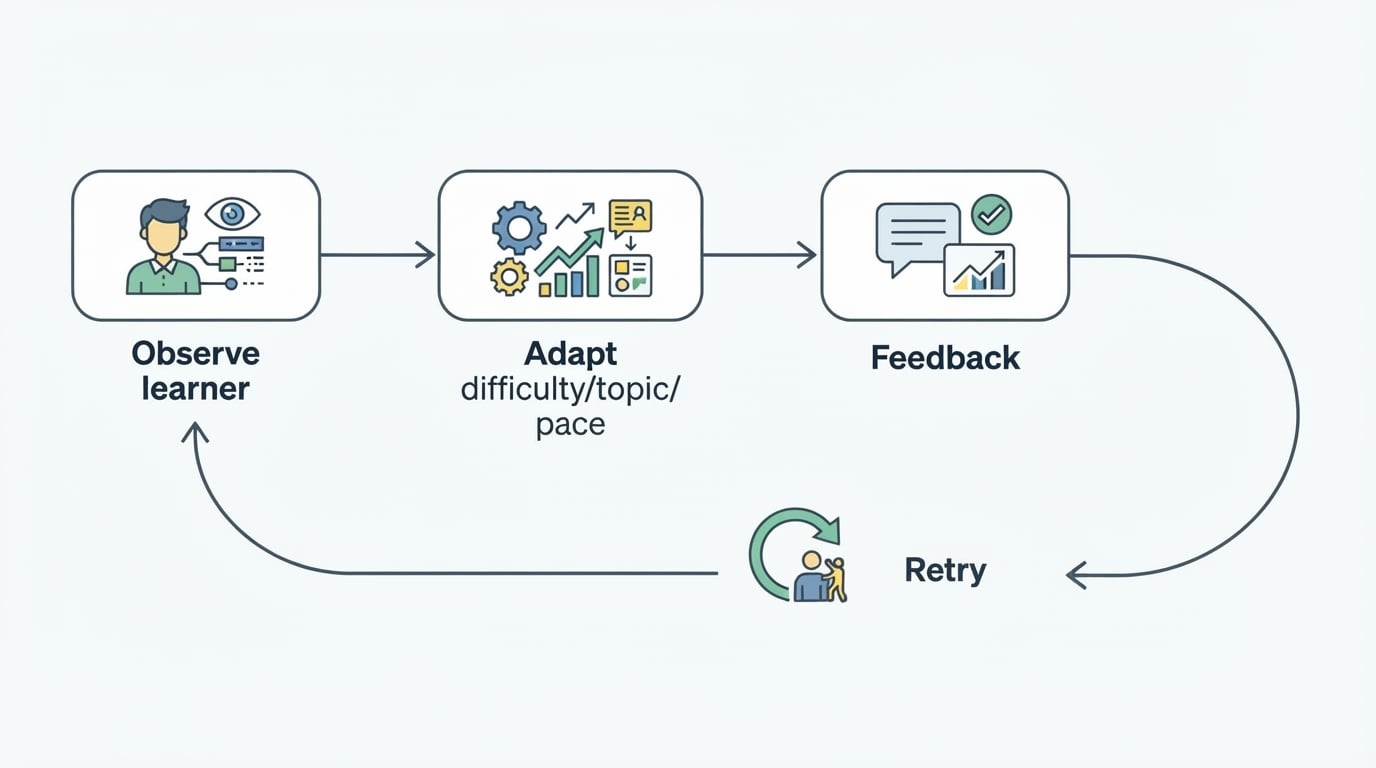
AI‑personalized curriculum. MANA follows the CEFR framework (A1 through C2) and the AI adapts every lesson in real time. If you struggle with a grammar pattern, it generates extra practice on the spot. If you already know certain vocabulary, it moves ahead. It's not a one‑size‑fits‑all deck — it's a tutor that watches your progress.
Full‑skill coverage in 3‑minute sessions. Each lesson builds reading, writing, listening, and speaking through real‑world scenarios — ordering at a restaurant, making travel arrangements, small talk at work. Three minutes a day is the minimum, not the maximum.
Integrated translation as you learn. MANA includes a free AI translator supporting 16 languages plus browser tools: a bilingual flashcard generator (for when you do want to build custom vocabulary lists), shadow reading (BiliGlot) for listening practice, quiz trainers across 6 language pairs, and pinyin/furigana annotators. Everything works together.
Sugoi Ankicho solves one problem: vocabulary memorization. MANA Learn solves the broader problem: actually learning a language — for free.
Verdict: Who Should Use Which?
Need | Sugoi Ankicho | MANA Learn
Cram vocabulary for a test | ✅ Yes | ✅ Yes
Full language learning (grammar, speaking, listening) | ❌ No | ✅ Yes
Spaced repetition scheduling | ❌ No | ✅ Built-in
AI personalization | ❌ No | ✅ Real-time
Translation + learning in one app | ❌ No | ✅ Free AI translator
Pre‑built language courses (CEFR A1–C2) | ❌ No | ✅ Full curriculum
Multiple skill coverage | ❌ Vocabulary only | ✅ Reading, writing, listening, speaking
Zero cost, forever | ✅ Yes | ✅ Yes
Use Sugoi Ankicho if you specifically need a no‑frills vocabulary memorization tool for Japanese, you test within the next 7 days, and you're comfortable manually managing your review schedule.
Switch to MANA Learn if you want a complete free language learning app — AI‑personalized lessons with spaced repetition, full skill coverage, integrated translation, and a curriculum that takes you from A1 to C2 without spending a cent.
Sugoi Ankicho is a decent tool riding a viral wave. But the need it revealed — effective, free language learning — is better met by an app built for the whole journey.
Start learning with MANA Learn — free, AI‑powered, CEFR‑aligned, and built for real progress.
Disclosure: This is an independent review. I tested Sugoi Ankicho for 7 days in June 2026 under normal daily usage. MANA Learn is a completely free product with no paid tiers, no subscriptions, and no affiliate relationships. No compensation was received for this review.