Best Language Learning Apps in 2026: A Criteria-First Comparison
If you are comparing the best language learning apps, you are probably not looking for another vibes-based top 10. You want a clear way to judge whether an app will actually build usable skills—especially speaking, personalized practice, and progress you can trust—without discovering the useful parts only after you hit a paywall.
In 2026, the category looks crowded for a reason: gamified drills, CEFR-style courses, AI conversation partners, and freemium pricing all compete for the same daily habit. The useful move is not to crown a universal winner. It is to score apps against the same evaluation criteria, then match the trade-offs to your goal.
This comparison reviews leading language learning apps through four practical lenses: AI conversation depth, personalization, speaking practice, and progress tracking. It also includes a structured comparison table and shows where MANA Learn fits as an AI-first option built around structured courses and conversation-oriented practice.
How to evaluate language learning apps (not just download them)
Before you compare logos, lock the job you need the app to do. A travel phrase streak, a school or relocation goal, and conversation confidence are different products even when they share the same app store category.
Use these four criteria consistently:
| Criterion | What to inspect | Strong signal |
|---|---|---|
| AI conversation depth | Can you practice realistic dialogue, not only multiple-choice chat? | Multi-turn scenarios, roleplay, feedback on accuracy/complexity |
| Personalization | Does the app adapt content to level, interests, and weak spots? | Placement, adaptive sequencing, goal-based paths |
| Speaking practice | Is speaking optional playback, or scored practice with feedback? | Speech recognition, pronunciation feedback, spoken roleplay |
| Progress tracking | Can you see movement toward a recognizable standard? | Level maps, checkpoints, review of mistakes, skill visualizations |
Then overlay two buyer filters most roundups skip:
- Access depth — which of those capabilities stay usable without a premium upgrade?
- Learning structure — random daily drills versus a path that maps to proficiency standards such as CEFR.
Those filters matter because many “AI language apps” are excellent at one job and weak at another. Conversation-only tools can feel fluent quickly and still leave gaps in reading, writing, or structured progression. Habit apps can keep you consistent and still under-train speaking.
Comparison table: leading language learning apps
The table below summarizes publicly described strengths from each product’s own materials. Treat it as a decision map, not a secret ranking algorithm.
| App | Best for | AI conversation | Speaking practice | Personalization | Progress structure | Access model (high level) |
|---|---|---|---|---|---|---|
| MANA Learn | Learners who want AI-supported CEFR-style study with free-core access | AI tutoring and adaptive lessons (as described on product materials) | Speech-to-text pronunciation scoring described in product materials | Personalized content recommendations and adaptive sequencing | CEFR-aligned path from A1 to C2; mistake review systems | Free core emphasized; optional Pro upgrades listed in store materials |
| Duolingo Max | Learners already in Duolingo who want AI roleplay on top of the core path | Video Call and Roleplay powered by GPT-4-class features in Max | Real-time conversation practice with Lily; post-chat AI feedback on Roleplay | Topic continuity in Video Call; scenario-based Roleplay | Super/Max layers add Practice Hub and AI feedback on top of core lessons | Max is a paid tier above Super |
| Babbel | Learners who want expert-authored courses plus AI conversation practice | AI conversation partner for interactive dialogues | Speech recognition for pronunciation | Material tailored to level, interests, and time commitment | Progress trackers, real-time feedback, visualizations; placement test | Freemium: first lessons free; subscription for full access |
| Busuu | Self-led learners who want short lessons plus community/native feedback | Conversation practice is a core promise; personalized pronunciation feedback | Immersive speaking practice and pronunciation feedback | Study “your way” for different goals | Checkpoint-style assessment appears in product presentation | Free start available; Premium plans offered |
| Talkpal | Learners prioritizing high-volume AI speaking practice across many languages | Immersive AI dialogues, roleplays, call mode, debates, and more | Speaking/listening with real-time feedback and natural AI voice | Methods tailored to style and pace | Feedback and multi-mode practice rather than a single public CEFR map | Free tier with limits; Premium removes limits |
No single row is “best” for every learner. The right choice depends on whether you optimize for structured progression, AI conversation volume, expert-authored curriculum, community feedback, or free-core depth.
Criterion 1: AI conversation depth
AI conversation is no longer a novelty feature. The better question is how deep the dialogue gets and what feedback you receive afterward.
Duolingo Max is explicit about conversation-first AI add-ons. According to Duolingo’s own Max announcement, the paid Max tier includes Video Call with Lily and Roleplay scenarios, with AI feedback on accuracy and complexity after Roleplay. That is a strong design for learners who already like Duolingo’s core loop and want guided conversation practice on top.
Talkpal positions itself even more aggressively as an AI conversation coach: immersive dialogues, roleplays, call mode, debates, and real-time feedback across a very large language set. If your primary bottleneck is getting enough speaking reps, conversation-native products like Talkpal are built for that job.
Babbel frames AI conversation as a partner for interactive dialogues inside a broader expert-authored method, not as the whole product. That combination can help if you want structured lessons and still need low-pressure conversation reps.
Busuu emphasizes immersive speaking practice and personalized pronunciation feedback, with community/native-speaker interaction as part of the learning system. The value here is not only AI chat volume; it is feedback loops around real speech.
MANA Learn, based on approved product materials and its public site, is better understood as an AI-supported learning system rather than a pure chat app: personalized lesson recommendations, on-demand AI explanations, and adaptive progression through CEFR levels. If you need conversation-first immersion at massive volume, a specialist like Talkpal may still feel denser. If you need AI help inside a structured course path, MANA’s design intent is closer to “tutor + curriculum” than “endless roleplay only.”
Criterion 2: Personalization that changes what you study next
Personalization is easy to market and hard to verify from a landing page. Look for mechanisms, not adjectives.
- Babbel states material can be tailored to proficiency level, interests, and time commitment, with placement support across beginner to advanced.
- Talkpal claims methods tailored to style and pace, which fits a conversation product that branches by mode and difficulty.
- Duolingo Max personalization shows up operationally in conversation continuity (Video Call remembering prior topics) and scenario selection, layered onto Duolingo’s existing adaptive lesson engine.
- Busuu emphasizes learner control and goal-based study rather than one rigid classroom path.
- MANA Learn product materials describe personalized AI teaching and adaptive lesson sequencing through CEFR levels. That is a useful fit when your goal is progressing through recognizable proficiency bands, not only maximizing daily XP.
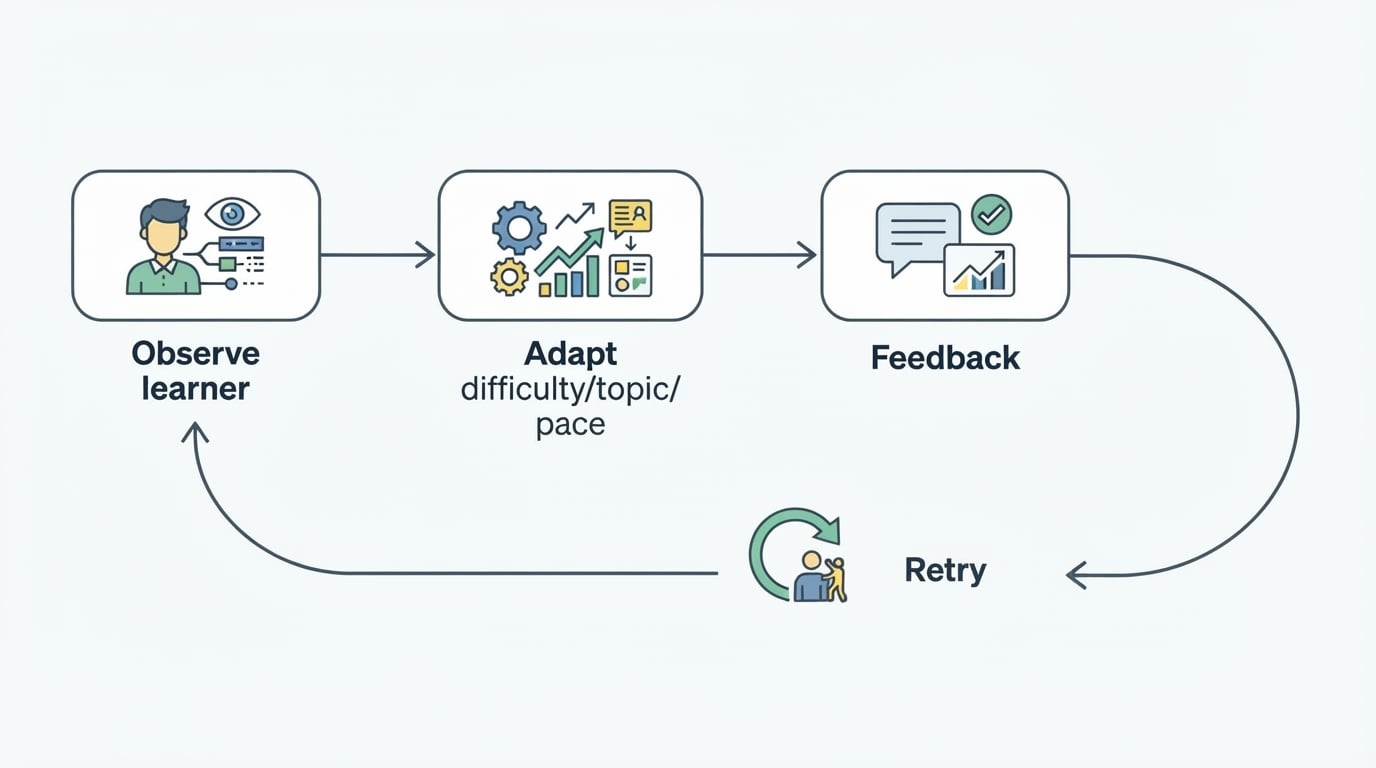
A practical test after one week: does the app re-serve your weak grammar, pronunciation, or vocabulary, or does it mostly advance the next unit regardless of mistakes?
Criterion 3: Speaking practice with feedback, not just a microphone icon
Many apps let you speak. Fewer apps make speaking informative.
From official product pages:
- Babbel highlights speech recognition to sharpen pronunciation and conversation confidence.
- Busuu stresses immersive speaking practice and personalized pronunciation feedback, plus community review dynamics.
- Talkpal is built around spoken and written chat with real-time suggestions and natural voice replies.
- Duolingo Max uses live AI conversation in Video Call and scenario practice in Roleplay, with post-session AI feedback in Roleplay.
- MANA Learn materials describe speech-to-text pronunciation scoring inside the learning flow. That supports active speaking practice, especially for learners who want private feedback before they attempt real conversations.
If speaking anxiety is your main blocker, prioritize products that combine low-stakes repetition with specific feedback. If your goal is exam reading/listening, conversation volume may matter less than structured input and review.

Criterion 4: Progress tracking you can explain to yourself
Progress should answer: “What can I do now that I could not do last month?”
Strong patterns look different by product type:
- CEFR-aligned paths help when you need transferable milestones (A1 foundations through advanced production).
- Skill dashboards and checkpoint assessments help when you want visible unit mastery.
- Mistake review systems help when retention, not novelty, is the bottleneck.
- Post-conversation feedback helps when speaking quality is the goal.
MANA Learn publicly emphasizes CEFR-aligned courses from A1 to C2 and adaptive movement through levels. Product materials also describe a wrong-question review pattern and gamified motivation via clubs, leaderboards, and badges. Those are complementary: structure for direction, review for retention, light competition for habit.
Babbel emphasizes progress trackers and visualizations alongside expert-designed courses. Busuu presents short lessons with checkpoint-style assessment cues. Duolingo’s broader ecosystem is habit- and skill-tree oriented, with Max adding richer AI feedback on conversation practice. Talkpal is denser on practice modes than on a single public proficiency framework.
Choose the tracking style that matches your accountability need. A CEFR map is easier to explain to a school, employer, or future-you. A conversation log is better evidence that you are actually speaking.
Where MANA Learn fits in the 2026 landscape
MANA Learn is strongest to consider when you want an AI-supported language app that keeps structured learning and free-core access in the same product story.
Based on the public site and approved product evidence (qualified where confidence is limited):
- Courses are described as CEFR-aligned from beginner through advanced bands.
- Lessons are positioned as short daily sessions with personalized recommendations.
- AI tutoring is described as on-demand explanation support for words, sentences, and grammar.
- Pronunciation practice is described via speech-to-text scoring.
- The brand emphasizes a free core and “no hidden costs” messaging on the website, while store materials also list optional Pro upgrades. In plain terms: evaluate the free tier yourself for the features you need, and treat Pro as optional expansion rather than assuming every advanced capability is identically free forever.
That combination positions MANA Learn as an AI-native alternative for learners who want conversation-relevant practice without abandoning curriculum structure. It is not the same product as a pure AI chat coach, and it is not only a streak game. It sits in the middle: structured path + AI help + speaking feedback.
Felo product screenshot.
Which app should you choose?
Use this scenario guide instead of a forced ranking:
Choose a conversation-heavy AI app (for example Talkpal) if your bottleneck is getting enough spoken reps across many languages and you accept freemium limits on the free tier.
Choose Duolingo + Max if you already thrive in Duolingo’s habit loop and specifically want AI Video Call/Roleplay features that sit above Super.
Choose Babbel if you want expert-authored courses, placement by level, and AI conversation practice inside a subscription learning system.
Choose Busuu if short self-led lessons plus speaking feedback and community/native interaction matter more than pure AI novelty.
Choose MANA Learn if you want an AI-supported, CEFR-oriented path with personalized lesson flow and pronunciation practice, and you care about how much of the core experience remains usable without immediately buying a premium AI add-on.
If your budget is tight, do not stop at “there is a free download.” Check whether AI explanations, speaking feedback, and the next units remain available after week two. If your goal is fluency under a deadline, prioritize structure and feedback quality over entertainment density.
A simple 7-day test before you commit
Whatever shortlist you keep, run the same one-week protocol:
- Complete a placement or first three lessons.
- Trigger one moment of confusion and see whether AI/help is actually available.
- Do at least three speaking attempts and note the quality of feedback.
- Check whether weak items reappear.
- Write down what level or skill the app claims you reached—and whether you believe it.
The best language learning app is the one that still improves your weakest skill after the novelty fades. In 2026, that usually means choosing deliberately among AI conversation depth, personalization, speaking feedback, and progress you can trust—not downloading the prettiest streak counter.
FAQ
What is the best language learning app overall?
There is no universal winner. The best app is the one that matches your goal: conversation volume, CEFR-style progression, expert curriculum, community feedback, or free-core depth.
Are AI language learning apps better than traditional courses?
AI apps are often better for on-demand practice and low-pressure speaking reps. Traditional or expert-authored courses can still be stronger for carefully sequenced grammar and professional content. Many learners combine both.
Do I need a paid plan for AI features?
Often yes on major freemium apps. Duolingo’s Max AI features are a paid tier above Super. Talkpal limits free features and sells Premium. Babbel and Busuu offer free starts with premium upgrades. Always verify the exact free-tier limits for AI chat, speaking feedback, and advanced units before you subscribe.
Where does MANA Learn fit versus Duolingo or Talkpal?
MANA Learn is closer to an AI-supported structured learning app with CEFR-oriented courses and tutoring/pronunciation support. Duolingo Max adds AI conversation layers onto a massive habit product. Talkpal concentrates on high-volume AI conversation across many languages. Pick based on whether you need curriculum structure, habit gamification, or conversation density first.