AI Language Learning Tools: A Skill-Based Guide for Real Practice
Most language apps are good at streaks, hearts, and colorful progress bars. They are less good at the harder part of learning: staying in a real conversation when the script ends. If you have finished a lesson, still freeze when someone asks an unexpected question, or can recognize words but cannot produce them, the gap is usually not motivation. It is practice design.
The better way to choose AI language learning tools is not by brand popularity. It is by skill. Speaking, listening, vocabulary, and grammar need different kinds of feedback. Some tools are excellent at one skill and weak at others. A practical stack beats a single "best app" claim.

Why gamified apps often stall before fluency
Gamification can help you open the app. It does not automatically create:
- unrehearsed conversation under time pressure
- recovery when you misunderstand the other person
- pronunciation feedback on your actual speech
- explanations tied to the sentence you just produced
- transfer from drill items into messy real-world talk
That is why many learners bounce between Duolingo-style drills, random ChatGPT prompts, and YouTube immersion without a system. AI helps only when you assign each tool a clear job and a completion standard.
A simple selection framework before you download anything
Use this checklist before adding another subscription:
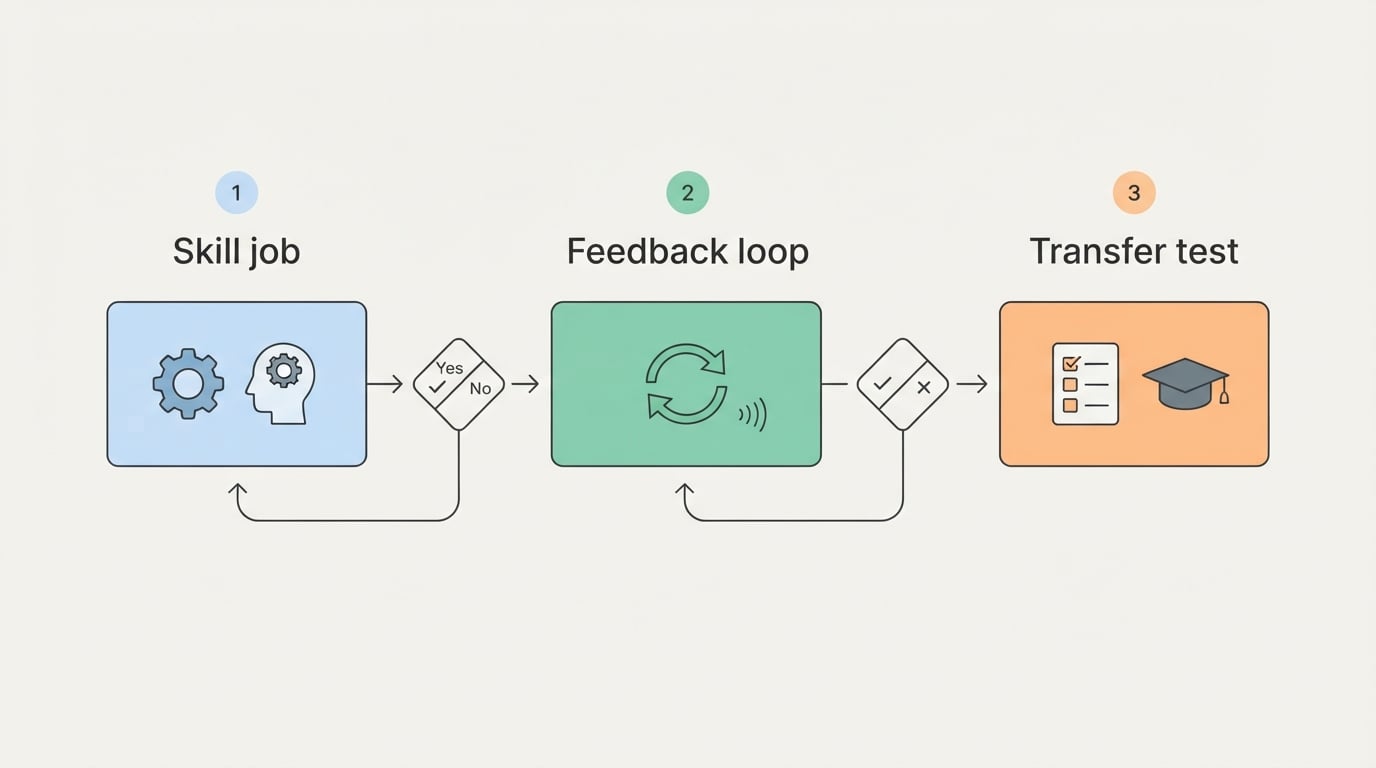
- Skill job — Which skill is blocked right now: speaking, listening, vocabulary, or grammar?
- Input type — Do you need typed chat, voice conversation, generated audio, translation support, or structured lessons?
- Feedback loop — Will the tool correct meaning, grammar, pronunciation, or only keep the conversation going?
- Transfer test — After one session, can you do something outside the app: order food, summarize a podcast clip, rewrite an email, or explain a grammar pattern you just used?
- Stack fit — Does this tool replace something you already use, or fill a missing skill?
If a tool cannot pass the transfer test, treat it as entertainment or light review, not core practice.
| Skill bottleneck | What good AI support looks like | Weak substitute |
|---|---|---|
| Speaking | Live or voice dialogue, repair strategies, pronunciation contrast | Multiple-choice phrase drills only |
| Listening | Controllable native-like audio, replay by word/phrase, varied accents | Static text lessons with no audio control |
| Vocabulary | Context sentences, retrieval practice, personal word lists from real input | Isolated flashcards with no usage |
| Grammar | Explanation tied to your output, rewrite suggestions, pattern noticing | Abstract rule pages with no production |
Speaking-first AI tools
Gliglish: conversation practice with a virtual teacher
Gliglish is built around spoken practice with an AI teacher. According to its product site, learners can converse, roleplay everyday scenarios, and work on speaking and listening without creating an account to try it. The experience is voice-first: adjustable speech speed, full audio playback, tap-to-replay individual words, real-time suggestions when you get stuck, grammar notes after you speak, and in-context explanations.
Useful details from the same source:
- multilingual speech input, including asking questions in your native language about the target language
- transliterations for languages such as Chinese, Japanese, Korean, Thai, and Greek
- pronunciation feedback in beta for American English, with a compare-your-version workflow
- a broad language list spanning major European and Asian languages, with one subscription covering multiple languages
- free access capped at about 10 minutes per day and 50 messages per conversation; paid Plus plans advertise unlimited speaking
Best use case: daily unrehearsed conversation when your main bottleneck is production confidence.
Limitation: free usage is intentionally constrained, and pronunciation scoring is not equally mature for every language. Treat it as a speaking gym, not a full curriculum replacement.
General-purpose chat AI for roleplay and repair
General chat assistants such as ChatGPT are widely used for language practice even though they are not language schools. Because official product pages were not available for verification in this research pass, do not assume a fixed set of language-learning features, voice modes, or plan entitlements. Use them as flexible text (and, where available to you, voice) partners with a strict prompt pattern:
- set level, target language, and scenario
- require short turns
- ask for corrections only after you finish a reply
- request one rewrite in more natural phrasing
- end with three reusable chunks from the conversation
Best use case: custom roleplay, rewriting your sentences, and on-demand grammar explanation.
Limitation: quality depends heavily on your prompts. Without structure, chat becomes endless polite conversation with weak retention.
Listening tools: train your ear with controllable audio
ElevenLabs for listening input and spoken models
ElevenLabs is a speech platform, not a language course. That is exactly why it is useful. Its site positions text-to-speech, voice libraries, speech-to-text, dubbing, and conversational agents across many languages. For learners, the practical value is controllable audio:
- turn graded texts, dialogues, or your own notes into listening material
- replay the same passage with consistent pronunciation
- build shadowing drills from short generated clips
- create listening variety when native content is too fast
Customer examples on the site include education-adjacent voice use, such as character voices associated with learning products. That does not make ElevenLabs a tutor. It makes it a high-quality audio engine.
Best use case: listening and pronunciation modeling when you already have text to practice.
Limitation: it will not diagnose your errors or sequence a syllabus. Pair it with a speaking or lesson tool.
Vocabulary and grammar tools
AI translation for comprehension support
Translation is often treated as cheating. Used poorly, it is. Used well, it is a comprehension scaffold.
MANA Learn also offers a free online AI translation experience as part of its broader language toolkit. Approved product evidence describes it as a no-account translator with support across 15+ languages, grammar-check output alongside translations, and a per-translation input limit around 5,000 characters. Typical learner uses include checking an unfamiliar phrase while reading and handling short real-world text under time pressure.
A clean workflow:
- Attempt the sentence yourself first.
- Translate only the blocked span, not the whole page.
- Save the phrase with one original example sentence.
- Reuse it in a speaking session the same day.
Best use case: just-in-time comprehension and grammar noticing.
Limitation: translation explains meaning; it does not create automatic recall. Without production practice, words stay passive.
Chat-based grammar coaching
For grammar, the highest-value AI pattern is not "explain the past perfect." It is:
- paste your own sentence
- ask what native speakers would change
- request the governing pattern in one plain-language rule
- generate three near-transfer examples at your level
- force yourself to produce a fourth example without looking
This turns AI from an answer key into a noticing coach.
Integrated AI learning platforms
MANA Learn: structured practice plus AI support
If your problem is fragmentation — one app for streaks, another for chat, another for audio — an integrated platform can reduce switching costs.
On its homepage, MANA Learn presents itself as a free AI-powered language learning app for beginners and self-directed learners. Stated product points include:
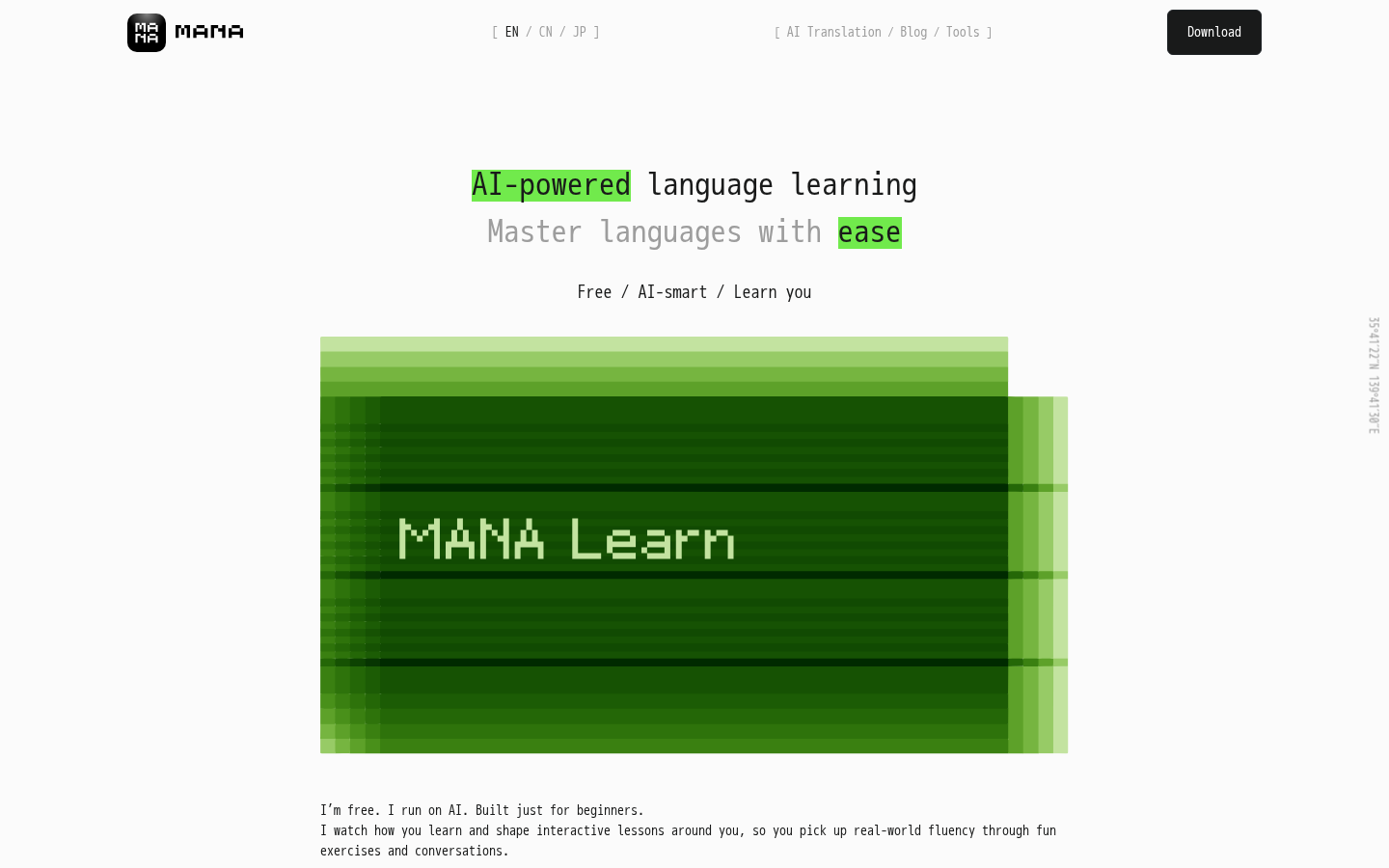
Felo product screenshot.
- personalized AI teaching and content recommendations based on learning behavior
- interactive lessons shaped around practical scenarios
- CEFR-aligned progression from A1 to C2
- short daily sessions positioned around a few minutes a day
- a free positioning with no hidden-cost messaging
- conversation and exercise practice inside the learning flow
That combination matters because many "AI conversation" products give you talk time without a level path, while many course apps give you a path without enough unrehearsed speech. MANA Learn's useful role in a stack is the middle layer: structured progression with AI support, not a claim that one app ends the need for authentic input forever.
Best use case: learners who want free structured study and AI help in one place.
Limitation: public homepage claims should be verified against the exact language pair and lesson experience you need. As with any app, completion depends on your transfer practice outside the product.
How to combine tools without drowning in apps
A realistic weekly stack looks like this:
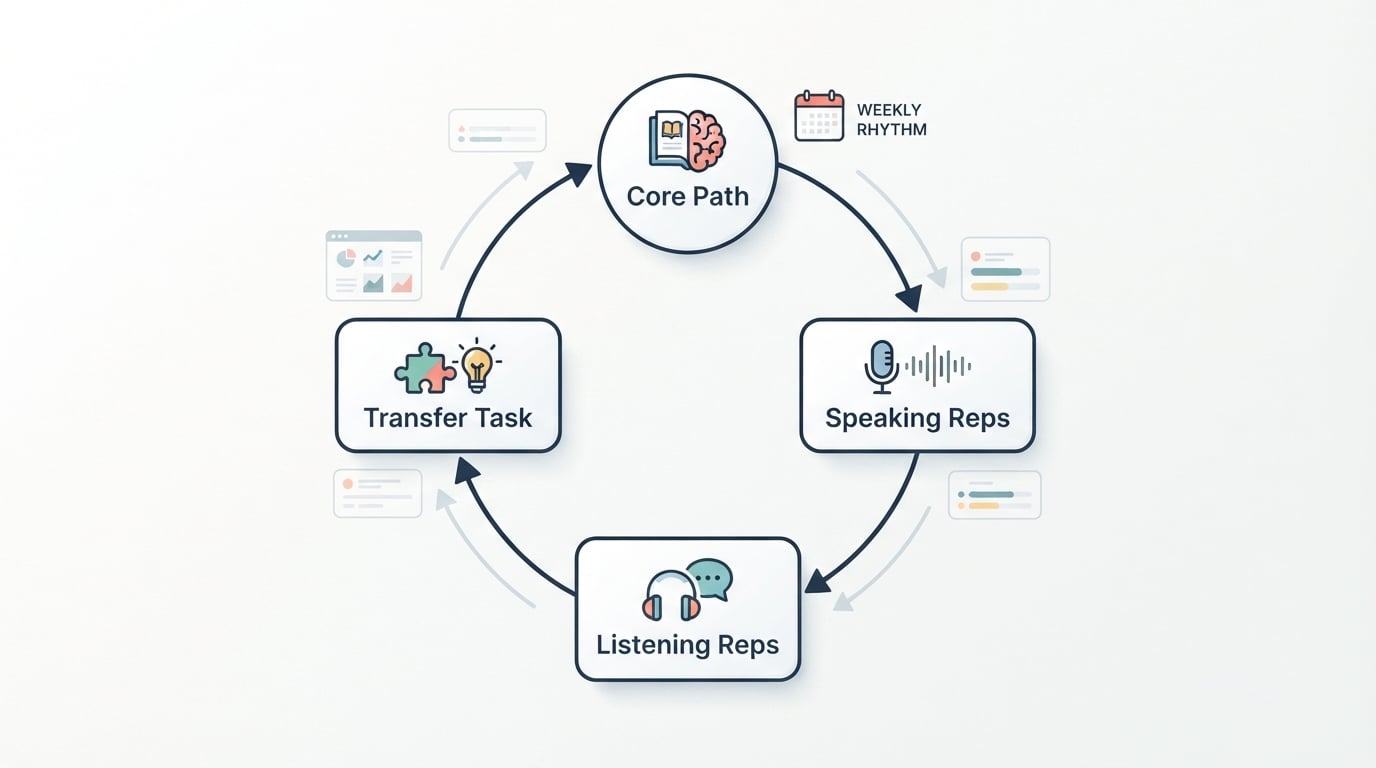
- Core path — 4 to 5 short structured sessions in an integrated app such as MANA Learn.
- Speaking reps — 10 to 15 minutes of unrehearsed dialogue in a conversation tool such as Gliglish, or a tightly prompted general chat session.
- Listening reps — one short generated or authentic clip, shadowed twice, summarized once.
- Lexis capture — 5 to 10 phrases from the week's real friction points, reviewed with translation only after a first attempt.
- One transfer task — send a message, make a booking script, narrate your day, or explain a concept aloud without notes.
Stop adding tools when the stack already covers speaking, listening, vocabulary, and grammar. More AI rarely fixes a missing transfer task.
Common mistakes that waste good AI tools
- Collecting apps instead of finishing conversations
- Letting the AI talk more than you do
- Accepting fluent replies you cannot reproduce
- Translating entire pages before attempting meaning
- Practicing only comfortable topics
- Skipping correction review
- Confusing pronunciation exposure with pronunciation feedback
- Measuring success by streak length instead of real-world output
A simple completion standard: if you cannot reuse today's language in a two-minute unscripted monologue or chat, the session is incomplete.
Choosing your next tool in five minutes
Use this decision path:
- I freeze when speaking → prioritize Gliglish-style conversation practice or structured voice roleplay.
- I cannot follow native audio → build controllable listening with a speech platform such as ElevenLabs, then shadow short clips.
- I understand more than I can say → reduce translation dependence; force production with delayed correction.
- My study is random → start with an integrated path such as MANA Learn, then add one speaking tool.
- I only have scattered minutes → keep one core app plus one conversation channel. Do not run five free trials at once.
AI language learning tools are strongest when they compress feedback loops. They are weakest when they replace the uncomfortable work of producing language under mild pressure. Pick tools by skill job, demand a transfer test, and keep the stack small enough that you actually speak.