What Is Photo Cards Basic Vocabulary? Everything You Need to Know
Introduction
When you start learning a new language, the first challenge is building a foundation of words you can actually use. Photo cards for basic vocabulary have become one of the most reliable tools for this early stage — pairing images directly with words to create lasting mental associations. This article defines photo cards as a vocabulary acquisition tool, explores how they work, and shows how platforms like MANA Learn put them into practice effectively.
Definition
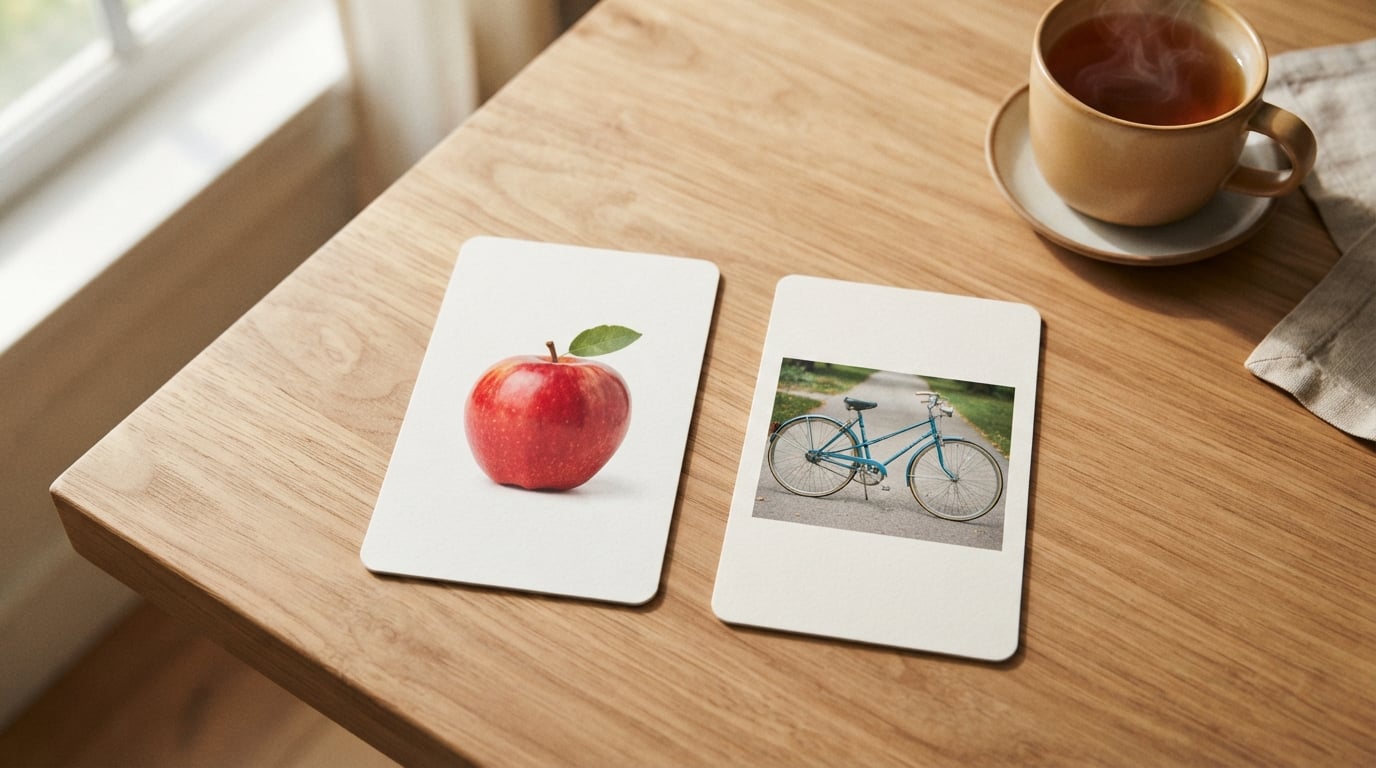
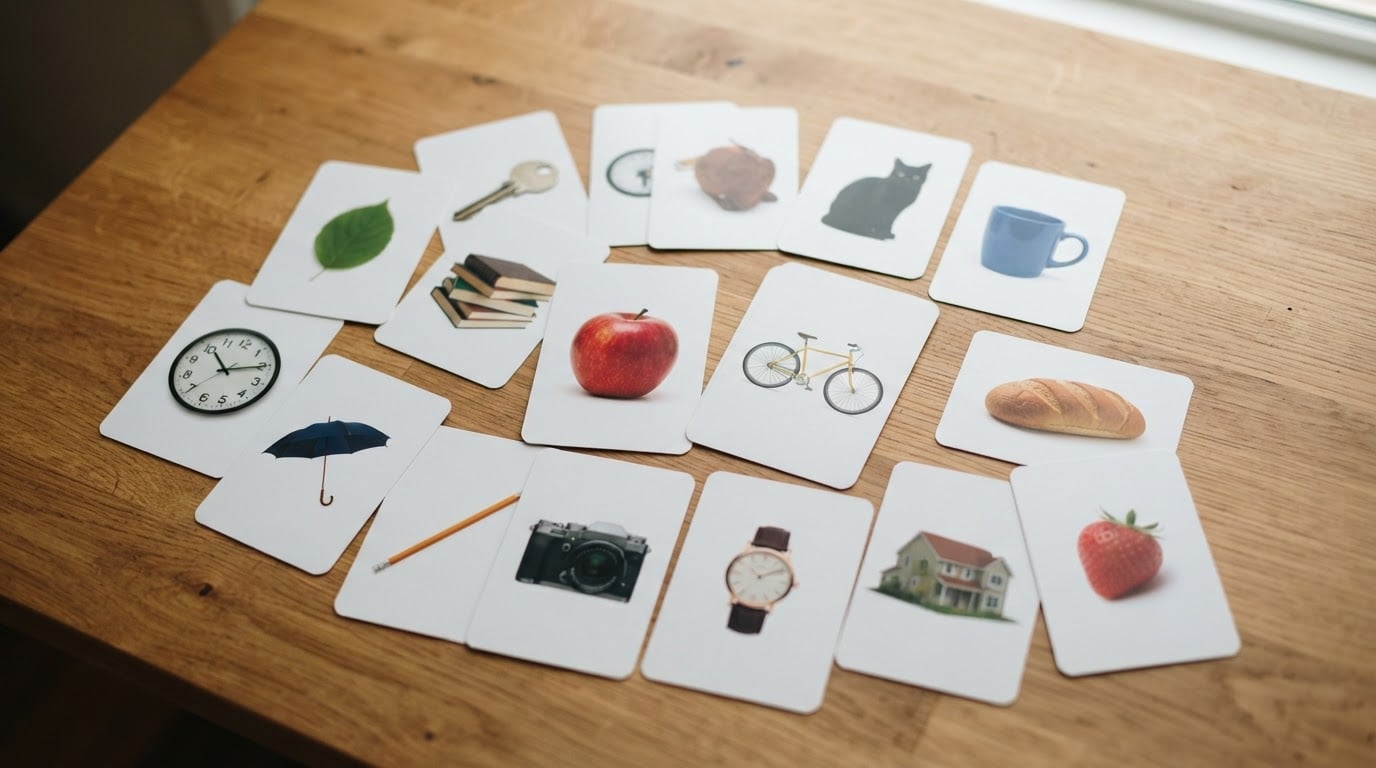
Photo cards for basic vocabulary are learning materials that pair a visual image with a target word or short phrase. Unlike traditional flashcards that pair a word in one language with its translation, photo cards connect the word directly to what it represents — a picture of an apple next to the word "apple," for example, rather than "apple → manzana."
This distinction matters. When learners build associations between images and words, they bypass the mental step of translating through their native language. Over time, this helps them think in the target language rather than constantly converting between two.
Photo cards can take physical form as printed cards or digital form within apps and web platforms. In digital contexts, they often include audio pronunciation, interactive review modes, and spaced repetition scheduling — features that increase retention without requiring more study time.
Deep Dive: How Photo Cards Build Vocabulary
The effectiveness of photo cards comes from how the brain encodes memory. Visual information is processed and stored differently than text, and combining the two creates what researchers call a "dual coding" effect — the learner has two retrieval pathways for the same piece of information instead of one.
For basic vocabulary specifically, this approach works well for concrete nouns, everyday verbs, colors, numbers, and common adjectives. These are categories where a single clear image can capture meaning without ambiguity. Abstract concepts are harder to represent visually, which is why photo cards tend to be most effective at beginner and lower-intermediate levels.
A few key principles define how photo card systems are typically structured:
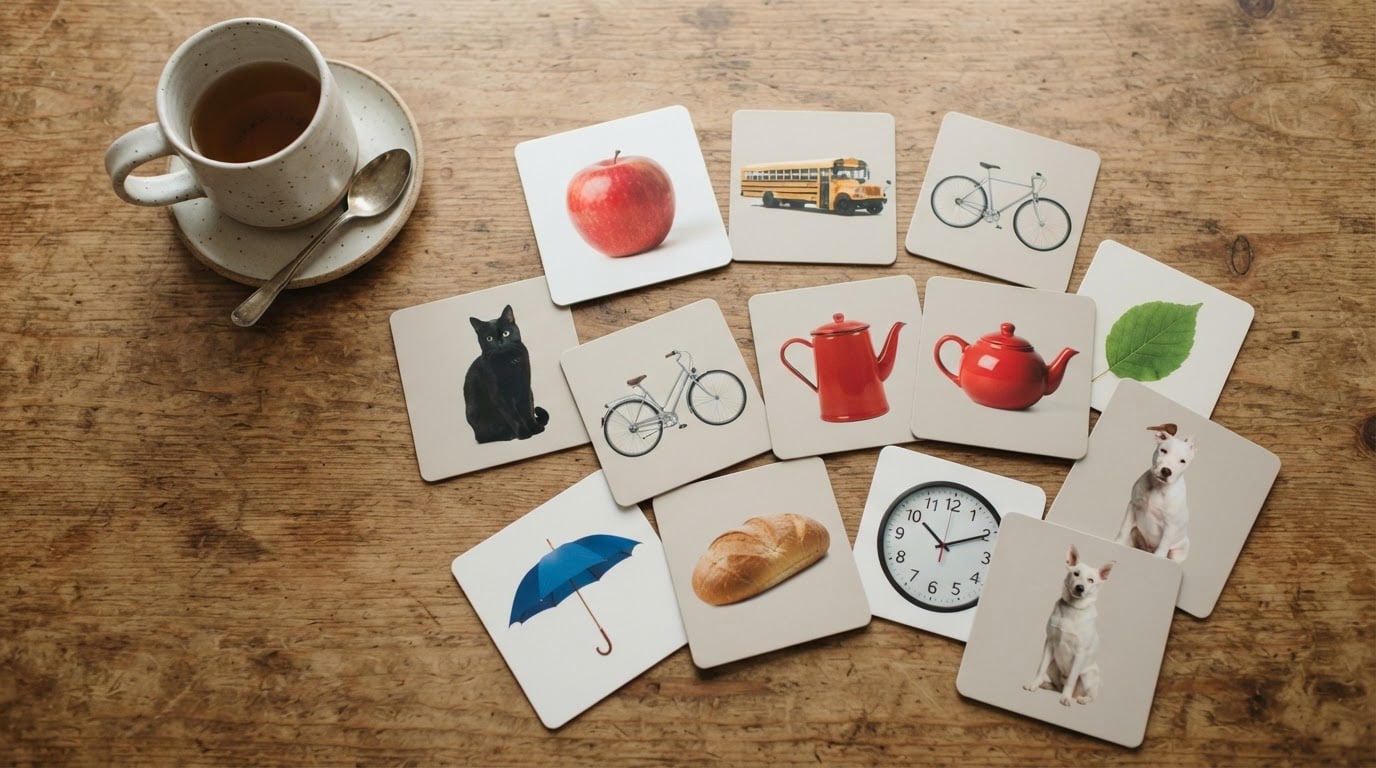
One concept per card. Each card focuses on a single word or phrase to avoid cognitive overload. The learner's attention stays on the association between the image and the target word.
Repetition and spacing. Seeing the same card at increasing intervals — a method called spaced repetition — moves vocabulary from short-term to long-term memory more efficiently than cramming.
Contextual grouping. Cards organized by theme (food, travel, household objects) let learners acquire vocabulary in clusters that mirror how words are actually used in conversation.
Audio integration. Hearing the word pronounced correctly alongside its image reinforces the phonetic form of the word, not just its visual spelling.
At the beginner level, photo cards typically target the most frequent vocabulary in a language — the words that appear most often in everyday speech and writing. Mastering this foundational set, often the first 500 to 1,000 words, gives learners the ability to understand and participate in basic conversations.
Use Cases
Photo cards for basic vocabulary serve several types of learners and contexts.
Self-study beginners use them to build an initial word bank before starting formal grammar instruction. Having a working vocabulary makes it easier to understand examples and sentences when grammar rules are introduced.
Classroom supplementation is another common application. Teachers use photo card sets to introduce new vocabulary units, run quick review activities, or support students who need visual reinforcement alongside written materials.
Young learners benefit particularly from photo cards because children process visual input readily and enjoy the format. Many language apps designed for children are built almost entirely around image-word pairing.
Travel preparation is a practical use case for adults — a focused set of photo cards covering transportation, food, directions, and accommodation can prepare a traveler to navigate basic interactions in a new country.
MANA Learn illustrates how this approach can be structured around internationally recognized standards. According to the MANA Learn product team, the platform's CEFR Standards Courses feature presents introductory cards organized around the Common European Framework of Reference for Languages, with dedicated content covering A1 and A2 levels — the beginner stages where core vocabulary acquisition is the primary goal. This alignment with CEFR standards means learners working through MANA Learn's photo card sets are building exactly the vocabulary that formal language assessments expect at each level.

Frequently Asked Questions
What is the difference between photo cards and regular flashcards?
Regular flashcards typically pair a word in the target language with its translation in the learner's native language. Photo cards replace the translation with an image, encouraging the learner to associate the word directly with its meaning rather than routing through another language.
What level of language learner benefits most from photo cards?
Photo cards are most effective for beginners (A1–A2 on the CEFR scale) and lower-intermediate learners (B1). At these levels, vocabulary acquisition is the primary bottleneck, and the vocabulary being learned tends to be concrete enough to represent visually.
How many words should a basic vocabulary set cover?
A foundational vocabulary set typically covers 500 to 1,500 words. This range is enough to handle everyday conversations and understand the majority of common written text. Many educators use frequency lists to prioritize which words belong in a basic set.
Can photo cards work for abstract vocabulary?
Photo cards are less effective for abstract concepts because images cannot represent them unambiguously. Most photo card systems focus on concrete vocabulary at basic levels and introduce more abstract language through other methods as learners advance.
Are digital photo cards better than physical ones?
Digital photo cards offer advantages like audio pronunciation, spaced repetition scheduling, and portability. Physical cards have tactile advantages and no screen time. Many learners combine both: digital apps for daily review and physical cards for focused study sessions.
How long does it take to build basic vocabulary with photo cards?
With consistent daily study of 15 to 20 minutes, most learners can acquire a working vocabulary of 500 words within two to three months. Retention depends heavily on review consistency rather than study session length.
Conclusion
Photo cards for basic vocabulary work because they align with how the brain naturally builds associations — through images, repetition, and spaced recall. For learners at the beginner stage, they offer a direct route to foundational word knowledge without the cognitive overhead of translation-based methods.
Platforms like MANA Learn demonstrate how photo card vocabulary learning can be organized around established frameworks like CEFR, ensuring that beginners are building the vocabulary that actually matters for language progression. Whether you are studying independently, supplementing classroom instruction, or preparing for travel, photo cards remain one of the most accessible and effective tools for establishing the word base that makes further language learning possible.