Busuu App vs. MANA Learn: Which Language App Is Worth Your Money in 2026?
Intro

If you're searching for the best busuu app experience, you already know what you want: structured lessons, real progress, and a learning system that fits your life. Busuu has built a strong reputation as one of the leading language learning platforms, with millions of users relying on it for everything from casual vocabulary practice to serious exam prep. The app's popularity is no accident — search volume for the busuu app sits at around 1,600 monthly searches, with a cost-per-click of $3.56, signaling that users arriving at this comparison are ready to make a real purchasing decision.
But with AI-powered alternatives like MANA Learn entering the market, it's worth asking whether the most popular option is still the best one — especially if personalized learning is a priority. This comparison breaks down Busuu and MANA Learn across the factors that matter most: curriculum quality, AI personalization, pricing, and who each app actually serves best.
Overview Table
| Feature | Busuu | MANA Learn |
|---|---|---|
| Learning approach | Structured, social | AI-personalized, adaptive |
| CEFR alignment | Yes (A1–C1) | Yes (A1–B2+) |
| AI personalization | Limited | Core feature |
| Native speaker feedback | Yes (community) | No |
| Languages available | 12+ | Growing catalog |
| Free tier | Yes (limited) | Yes |
| Best for | Social learners, structured paths | Self-directed, adaptive learners |
| Pricing (premium) | ~$13.99/month | Competitive monthly plans |
Detailed Reviews

Busuu
Busuu has been in the language learning space long enough to refine its formula. The app centers on short, digestible lessons organized around practical vocabulary and grammar. What sets it apart from many competitors is its community feedback feature: you complete writing and speaking exercises, and native speakers from around the world review your work and leave corrections.
The platform covers 12+ languages including Spanish, French, German, Japanese, Arabic, and Mandarin. Lessons follow a clear progression from A1 beginner to C1 advanced, and Busuu explicitly maps its curriculum to CEFR (Common European Framework of Reference) levels — useful if you're working toward a language certification or need to demonstrate a specific proficiency level to an employer or institution.
The free tier gives you access to basic lessons, but the better features — grammar lessons, offline downloads, and the full lesson catalog — are locked behind a Premium subscription. At around $13.99/month (or less on annual plans), it's mid-tier pricing for what it offers.
Where Busuu falls short: The learning path is largely fixed. The app doesn't adapt much to your specific weaknesses or learning pace. If you already know some Spanish but struggle with subjunctive conjugations, Busuu will still walk you through early vocabulary before getting there. The experience is solid but not personalized.

MANA Learn
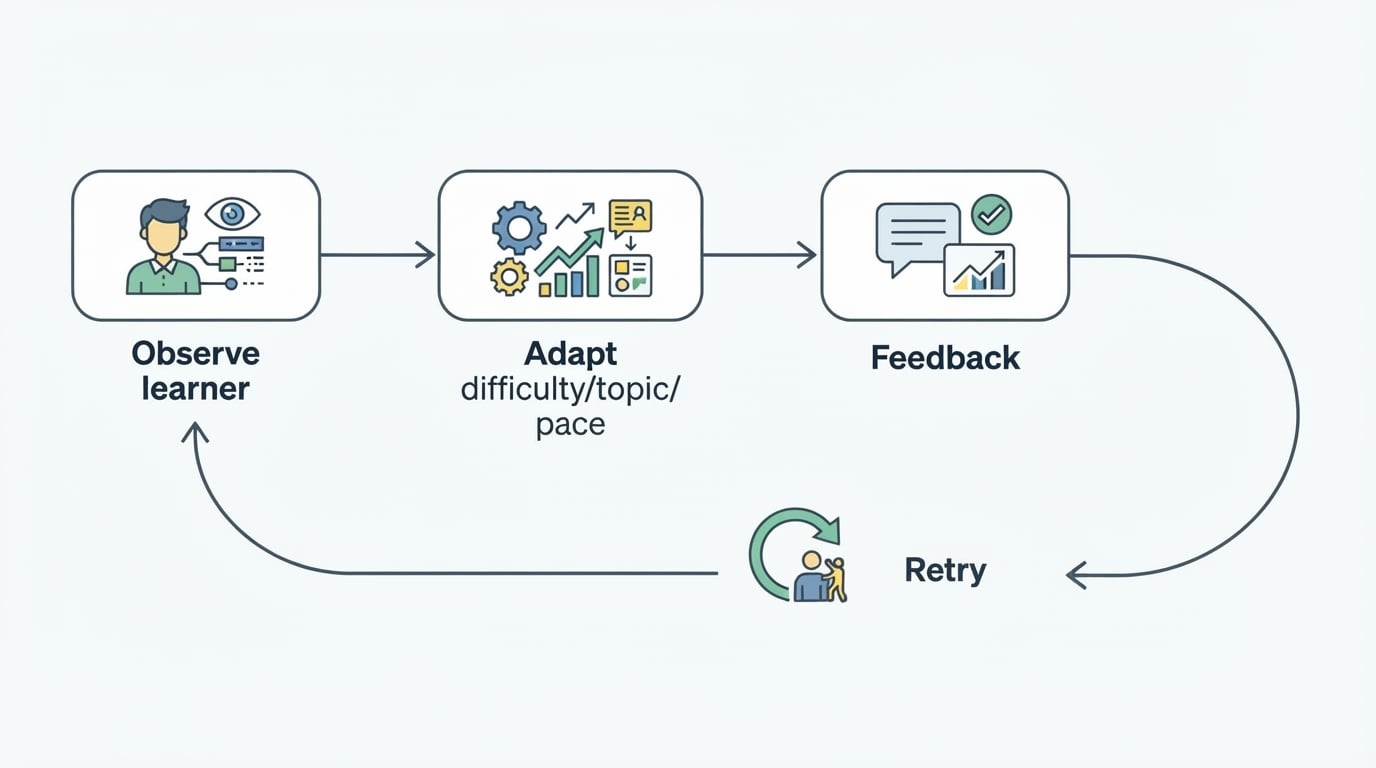
MANA Learn takes a different approach: it puts AI-driven personalization at the center of the experience rather than treating it as a bolt-on feature. Rather than a fixed curriculum everyone follows, the app builds and adjusts your learning path based on how you're actually performing — what you know, what you're forgetting, and where you need more repetition.
The platform also structures its content around internationally recognized CEFR standards. According to the MANA Learn product team, the app presents introductory cards at each level — A1, A2, and beyond — that explain the specific competencies associated with that CEFR tier. This isn't just cosmetic labeling: the team has designed the course architecture so that skills and vocabulary taught at each stage map to the real-world communication benchmarks those levels represent. The CEFR Standards Courses interface shows learners exactly which level they're working in and what communicative goals they're building toward, giving the learning process a clarity that vague "beginner/intermediate/advanced" labels can't match.
The app is available for download on both iOS and Android, and the MANA Learn team offers direct support channels for learners who need help navigating their path. For learners who want to know exactly where they stand in internationally comparable terms — and have the app actually respond to their performance — this structure offers real value.
Where MANA Learn stands out: The AI personalization isn't just about pacing. It's about identifying gaps and routing your sessions toward what will move you forward fastest. If you've already got A1 material down but are shaky on A2 listening comprehension, the system surfaces that rather than making you re-tread familiar ground.
Where it's still growing: Busuu's community feedback feature — where native speakers review your writing — is genuinely valuable and something MANA Learn doesn't currently replicate. If real-time human correction is important to your learning style, Busuu still has an edge there.
Comparison

Curriculum Structure
Both apps align to CEFR standards, which is the right call for anyone who wants their progress to mean something outside the app. Busuu's curriculum is well-established and covers a broad range of languages. MANA Learn's CEFR integration goes deeper into adaptive sequencing — the level structure isn't just labeling, it's the architecture the AI uses to route your sessions.
AI and Personalization
This is the clearest differentiator. Busuu uses some spaced repetition and review scheduling, but the core curriculum path is the same for every user. MANA Learn's AI adapts to your individual performance data, meaning two users at the "A2 Spanish" stage may have meaningfully different lesson queues depending on where each one's gaps are. For self-directed learners who want efficiency over uniformity, MANA Learn's model has a practical advantage.
Social and Community Features
Busuu wins here, and it's not close. The native speaker feedback system is a well-developed feature that gives you real correction from real people. If you're preparing for a conversation-heavy use case — travel, business, cultural immersion — that human element matters. MANA Learn focuses on AI-driven adaptation and doesn't currently offer a community review layer.
Pricing and Value
Both apps offer free tiers with meaningful limitations. Busuu's premium pricing is well-established and frequently discounted. MANA Learn's pricing is competitive and positions itself as accessible for learners who want smarter, not just more, content. For learners who find themselves paying for Busuu but not progressing past the same sticking points, MANA Learn's adaptive approach may deliver better ROI.
Language Catalog
Busuu covers more languages today — 12+ with depth versus MANA Learn's growing catalog. If you need a less common language, Busuu is the safer choice for now.
Verdict
Choose Busuu if: You want a proven, structured curriculum with human feedback from native speakers. It's especially well-suited for social learners, people preparing for language certifications, or anyone who benefits from the accountability of community interaction. The CEFR-aligned paths make progress legible, and the app's maturity means most edge cases are handled well.
Choose MANA Learn if: You want your app to actually adapt to how you learn, not just give everyone the same path. MANA Learn's AI personalization — grounded in CEFR-standard course architecture — means your sessions are shaped by your actual performance data, not a generic curriculum. It's the better fit for efficiency-focused learners who've outgrown one-size-fits-all approaches.
If you've hit a plateau with Busuu: That plateau is often a product of fixed curriculum design. MANA Learn's adaptive routing is specifically designed for the kind of targeted gap-filling that breaks through stagnation.
Conclusion
The busuu app is a legitimate, well-built language learning tool — and for many learners, it delivers real results. But the language learning app market in 2026 is no longer a comparison between good and mediocre options. MANA Learn represents a genuine step forward in personalized learning, with CEFR-standard courses that adapt to individual progress rather than treating every learner identically.
If you're evaluating language apps with serious intent — whether you're preparing for a proficiency test, learning for a career move, or simply tired of apps that don't respond to where you actually are — the comparison isn't just about features. It's about whether the app learns you as much as you learn the language. On that measure, MANA Learn's AI-first approach gives it a meaningful edge over Busuu's more static curriculum. Both apps are worth your time, but for learners who want personalization at the core of the experience, MANA Learn is the stronger long-term investment.