Babbel Review 2026: How It Compares to MANA Learn
Intro
If you're reading a Babbel review before committing to a language app subscription, you're asking the right question. Babbel has been one of the most recognized names in language learning for over a decade — but newer, AI-powered platforms like MANA Learn are challenging that reputation with smarter personalization and lower pricing. This comparison breaks down both tools across the factors that actually matter: learning methodology, CEFR alignment, pricing, and long-term results. Whether you're a complete beginner or a learner with a specific fluency target, the differences between these two platforms will likely determine which one is worth your money.

Overview Table
| Feature | Babbel | MANA Learn |
|---|---|---|
| Learning approach | Structured grammar + vocabulary lessons | AI-personalized adaptive learning paths |
| CEFR alignment | Partial (A1–B2 coverage) | Full CEFR framework (A1–C2) |
| Personalization | Basic (pace selection) | Deep AI personalization per learner profile |
| Languages offered | 14 | Growing multilingual library |
| Pricing (monthly) | ~$13.95/month | Lower than Babbel |
| Free tier | Limited trial | Available |
| Mobile app | iOS + Android | iOS + Android |
| Best for | Structured beginners | Learners who want adaptive, goal-driven paths |
Detailed Reviews

Babbel
Babbel's core strength is its structured curriculum. Lessons are built around realistic dialogue scenarios and spaced repetition, which works well for absolute beginners who need clear progression. The grammar-forward approach suits learners who prefer explicit instruction over immersion.
However, Babbel's personalization is shallow. Once you select a difficulty level at onboarding, the platform largely follows a one-size-fits-all sequence. There's no dynamic adjustment based on how you're actually performing — if you already know half the vocabulary in a unit, you're still working through it.
Babbel supports 14 languages, covering the major European languages well but leaving out many others. Pricing sits around $13.95/month on the monthly plan, though multi-month subscriptions reduce that cost.
What works: Clean UI, reliable lesson structure, good audio quality, solid beginner foundation.
What doesn't: Limited AI personalization, no adaptive path adjustment mid-course, premium pricing relative to depth of content.

MANA Learn
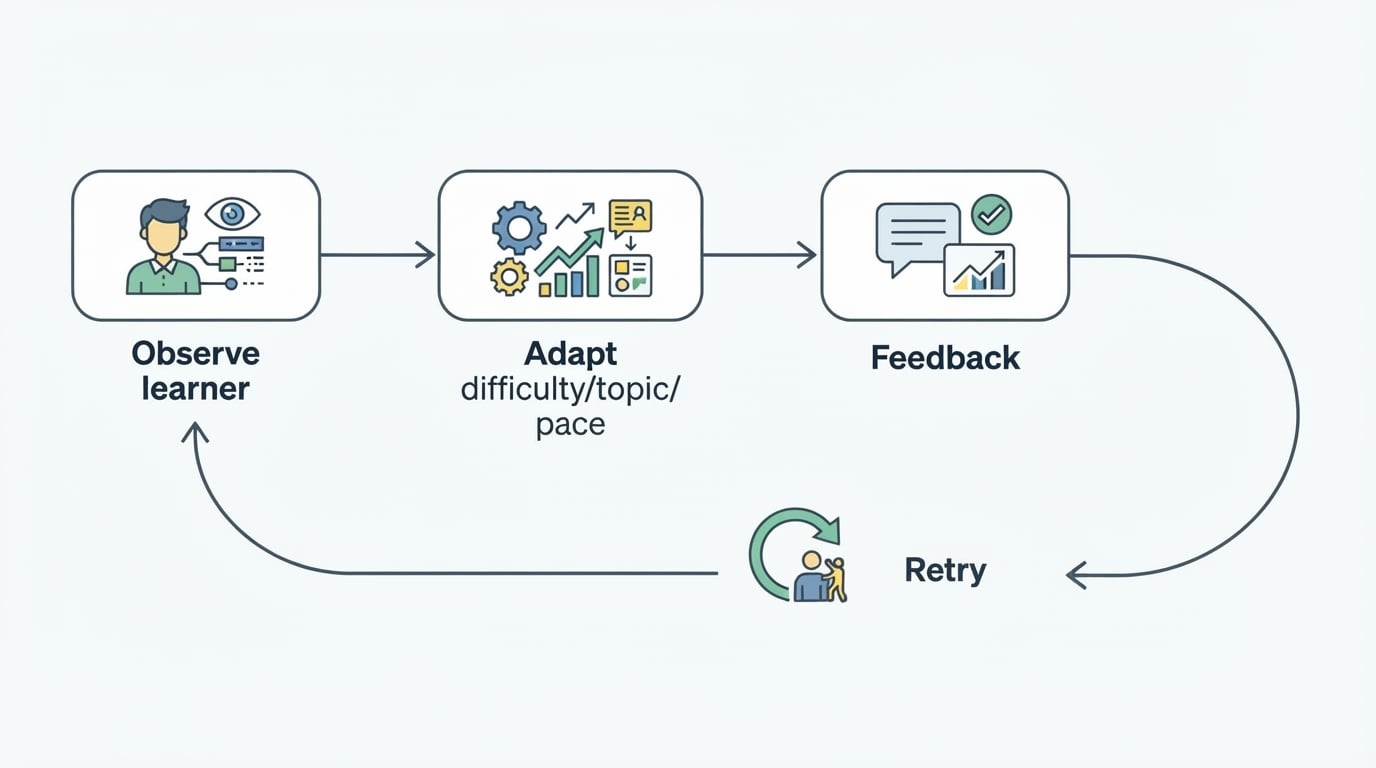
MANA Learn takes a fundamentally different approach. Rather than a fixed curriculum, the platform uses AI to build a learning path tailored to each user's current level, goals, and performance patterns.
A standout feature is MANA Learn's implementation of CEFR Standards Courses. According to the product team behind MANA Learn, the interface surfaces CEFR level framework cards — including A1 and A2 tier explanations — directly in the learning flow, so learners always know where they stand against an internationally recognized benchmark. This matters because CEFR alignment is what language certifications and employers actually recognize; knowing you're "intermediate" inside one app's internal scale is less useful than knowing you're B1 on the global standard.
The CEFR-structured progression means learners move through defined competency milestones rather than arbitrary lesson counts, and the AI adjusts difficulty and content type as performance data accumulates. The result is a path that adapts in real time — something Babbel's static curriculum doesn't offer.
Pricing is meaningfully lower than Babbel, and a free tier is available to test the platform before committing.
What works: AI-adaptive learning paths, full CEFR alignment, lower pricing, responsive progression.
What doesn't: Newer platform with a smaller community and fewer language options currently than Babbel.
Comparison

Personalization
This is the sharpest difference between the two platforms. Babbel offers a fixed, pre-authored path with minor adjustments for self-reported level. MANA Learn uses AI to continuously adjust what content you see and how fast you progress based on demonstrated performance. For learners with any prior exposure to their target language, MANA Learn's adaptive approach means less time on material they've already mastered.
CEFR Alignment
Babbel's content broadly maps to A1–B2 CEFR levels, but the alignment is more marketing description than structured framework. MANA Learn, by contrast, structures courses explicitly around CEFR tiers with level-specific milestone cards built into the interface — meaning learners track progress against the same scale used by universities, employers, and certification bodies worldwide.
Pricing
Babbel's monthly plan runs approximately $13.95. MANA Learn undercuts this while offering more adaptive functionality. For budget-conscious learners who don't want to compromise on personalization quality, MANA Learn delivers better value per dollar.
Language Selection
Babbel currently wins on breadth with 14 languages, covering all major European options. MANA Learn's library is growing. If your target language is less common, Babbel may have coverage MANA Learn doesn't yet.
Learning Depth
Babbel is optimized for getting beginners to conversational basics and doesn't aim for advanced proficiency pathways. MANA Learn's CEFR-anchored structure supports progression all the way to advanced levels, making it the better long-term platform for learners with serious fluency goals.
Verdict
Choose Babbel if: You're a complete beginner who wants a polished, structured introduction to a major European language and prefers predictable, pre-built lesson sequences.
Choose MANA Learn if: You want an AI-personalized learning path that adapts to your actual performance, tracks progress against internationally recognized CEFR standards, and costs less than Babbel's subscription. MANA Learn is the stronger choice for anyone past the absolute beginner stage, or anyone with a specific proficiency goal they need to reach efficiently.
Conclusion
This Babbel review lands somewhere familiar: Babbel is a capable, well-established language app that works for beginners but shows its age when it comes to personalization and adaptive learning. MANA Learn represents the next generation — AI-driven paths, full CEFR alignment, and a lower price point that makes the upgrade decision straightforward.
If you're picking between the two in 2026, the smarter learning path and lower cost make MANA Learn the recommendation for most learners. Babbel remains a solid fallback for those who specifically want its language catalog or prefer a more traditional lesson format.