7 Ways to Learn English (2026): A Complete Beginner's Guide
"Want to learn English but no idea where to begin" — that the position you're in?
English-learning info is everywhere, yet the moment you try to start, the choices overwhelm. There's no single way to learn English, but **moving through systematic steps is the fastest path forward**.
This guide walks through 7 effective ways to learn English, anchored to the international CEFR standard, in plain-beginner terms. Methods you can start with just 3 minutes a day are covered too.
---
Before You Start
Know your level (what is CEFR?)
Before starting, **know your current level**. CEFR — the global standard for language proficiency — sets six levels from A1 to C2.
Most beginners start at **A1–A2**. Solidify A1 foundations first.
> CEFR is the international common standard drafted by the Council of Europe. Major English exams (Eiken, IELTS, TOEFL) align with it. (Reference: [Council of Europe – CEFR](https://www.coe.int/en/web/common-european-framework-reference-languages))
Set realistic goals
"Speak fluently in a month" isn't realistic. English builds through **consistent, accumulating practice**. Start with small, concrete goals — "introduce myself in 3 months" — to keep motivation alive.
---
7 Effective Ways to Learn English
1. Foundations: Pronunciation and the Alphabet
The first step is **locking down pronunciation and the alphabet**. The classic self-study trap: skipping past pronunciation with vague approximations.
**How to start:**
- Learn the sounds of all 26 letters
- Study phonics (the letter-to-sound mapping rules)
- Confirm pronunciation basics through free YouTube content
Solid pronunciation foundations dramatically speed up later listening and speaking.
2. Master Basic Grammar
Many learners avoid grammar as "too hard," but **English grammar isn't as complex as it looks**. Lock in middle-school-level grammar first — present, past, questions, negatives.
**Effective grammar-learning tricks:**
- Don't try to read a textbook cover-to-cover
- Read example sentences aloud, repeatedly
- Use rules immediately after learning them (output)
Treat grammar as something to **use**, not just **memorize**.
3. Build Vocabulary
The foundation of English ability is **vocabulary**. Growing core word knowledge pulls listening and reading up together.
**Scientifically effective vocab method: Spaced Repetition (SRS)**
A Spaced Repetition System (SRS) reviews words **just as you're about to forget them**. Built on how human memory works, it sticks vocabulary far more efficiently than raw memorization.
Flashcard apps like Anki bring SRS in easily. Make 10–15 minutes of daily vocab a habit.
4. Train Listening
Build listening from early on. **Large input volume grows listening ability**.
**Beginner-friendly listening:**
- **YouTube English channels**: start with slow, beginner-friendly content
- **Podcasts**: build a habit during commute or chores (e.g., [BBC Learning English](https://www.bbc.co.uk/learningenglish/))
- **English-subtitled videos**: form the habit of understanding English in English
The key: **large amounts of comprehensible input**. Avoid content that's too hard — pick material where you understand 70–80%.
5. Strengthen Reading (Extensive Reading)
Extensive reading means **reading large amounts of slightly easier English** than your level. Reading smoothly without a dictionary builds the ability to understand English *as English* (the "English brain").
**How to start:**
1. Begin with picture books and graded readers (Oxford Bookworms etc.) 2. Guess unknown words from context and keep going 3. Step up the level gradually
The right starting point feels almost "this is too easy."
6. Practice Speaking
Many learners hit the wall of "studied English, still can't speak." The cause: **not enough speaking practice**. Listening and reading alone don't grow speaking.
**Speaking practice with AI**
Recently gaining attention: **conversation practice with AI**. No human partner needed, available anytime, repeatable infinitely. You can speak without fear of judgment — especially good for shy learners and beginners.
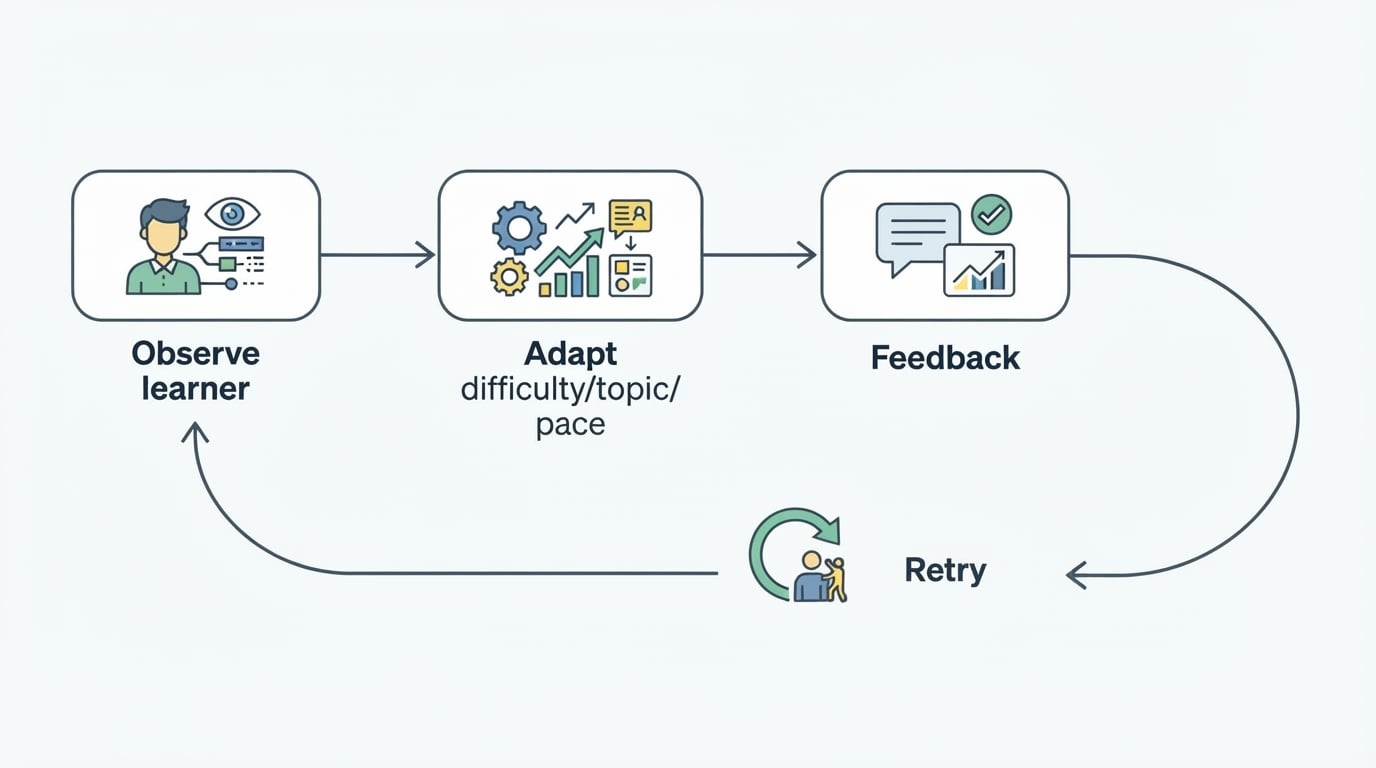
Per its official site, MANA Learn offers interactive AI conversation practice. Through everyday scenarios — restaurant ordering, asking for directions while traveling — you practice practical English. AI gives feedback on the spot, so effective speaking practice works solo.
**How to start AI speaking practice (concrete steps):**
1. Download MANA Learn from App Store or Google Play 2. Pick your target language (English) and current level 3. Open "Conversation Practice" and pick a scenario (e.g., ordering at a cafe) 4. Respond in English to AI-set situations 5. Check AI feedback and move to the next scenario
**Other speaking practice methods:**
- Shadowing (mimic audio to train pronunciation)
- Self-talk (narrate daily life in English)
- Online English conversation (1–2x a week to start)
7. Use Translation Tools
Mid-study, when "what does this word mean?" comes up, having a quick-resolve environment matters. **Using AI translation tools well** lets you resolve doubts without breaking study flow.
MANA Learn also provides an AI translation tool covering 15+ languages, usable for checking expressions on the spot while learning.
But avoid translation dependency. Make "understand without leaning on translation" the end goal — keep it as a supporting tool.
---
How to Build the Daily Habit
The most critical thing in English learning is **consistency**. Any method, no matter how good, is meaningless without it.
Microlearning lowers the bar
"Must study an hour a day" sets you up for collapse on busy days. Start with the mindset **3 minutes a day is enough**.
Microlearning (accumulated short-session study) is backed by extensive education research. Even brief daily contact makes English a habit.
Per public info, MANA Learn is designed around 3-minute daily microlearning sessions — sustainable for busy adults and students. The fully free pricing reinforces sustainability.
The app is [available on App Store and Google Play](https://manamana.ai/download.html).
3 tricks to habit-form
1. **Fix time and place**: anchor to an existing habit ("3 minutes after breakfast") 2. **Track it**: even marking days on a calendar boosts motivation 3. **Stack small wins**: value the "I learned 3 new words today" feeling
---
Summary: Start English Today
There are many ways to learn English, but here are the 7 effective steps:
1. **Pronunciation and alphabet foundations** — understand English sounds accurately 2. **Basic grammar** — start at middle-school level 3. **Vocabulary growth (SRS)** — stick words through scientific spaced repetition 4. **Listening (extensive)** — large volume of comprehensible content 5. **Reading (extensive)** — start easy, grow the English brain 6. **Speaking practice** — use AI to grow the courage to talk 7. **Translation tool use** — resolve doubts fast, don't break flow
What matters is **dropping the perfectionism and continuing a little each day**. English learning is a long journey, but the earliest possible start is the day you begin.
Start today — [try MANA Learn free](https://manamana.ai/download.html) for a 3-minute English habit. CEFR-aligned AI-personalized learning, paced to you.
---
FAQ
**Q: Can I learn to speak English on my own?** A: Self-study can take you to speaking fluency. The key: practice pronunciation / grammar / vocab / listening / speaking in balance, and continue output practice using AI or video content.
**Q: How long until I can speak English?** A: Varies by person, but with daily consistent study, basic everyday conversation (A2) takes ~6 months to 1 year.
**Q: Is there an age limit for learning English?** A: No. Adults can learn English at any age. With more vocabulary and logical thinking than children, systematic methods let adults progress efficiently.
**Q: Are there free tools to learn English?** A: Yes — many strong free tools. MANA Learn is a free AI language learning app offering CEFR A1–C2 personalized learning at no cost.
---
Article info is based on publicly available sources.