Babbel vs Duolingo: An Honest Comparison (And Why AI-Native Apps Are Winning in 2026)
When you search "Babbel vs Duolingo," you're probably not looking for another blog post that calls both apps "great for different learners" before slapping affiliate links on everything. You've likely already tried one of them — maybe both — and you're wondering whether the other one actually fixes what bothered you.
This comparison is for that person. We run MANA Learn, an AI-powered language app, so we have a stake in this market and we'll be transparent about it. But we've also watched how learners talk about Babbel and Duolingo in 2026, and the honest picture is more specific than most comparisons let on.
Why People Are Comparing These Two Apps Right Now
The search volume for "Babbel vs Duolingo" hasn't come out of nowhere. There's a specific frustration pattern driving it in 2026.
Duolingo introduced an energy system in late 2025 that replaced its older Hearts mechanic. The practical effect: each lesson costs energy units regardless of whether you answered correctly. Beginners who make more mistakes deplete their energy fastest — the opposite of what effective learning requires. Android Authority documented the user backlash when it launched.
Then in April 2026, Duolingo pushed a major course restructuring that dropped users mid-curriculum without context. Piunikaweb covered the complaints; Duolingo acknowledged the problem and added retroactive "catch-up lessons." For anyone who'd built a multi-year streak, this was the final straw.
Meanwhile, a visible wave of KOLs and language-learning creators — people who built audiences recommending Duolingo, Babbel, and Pimsleur — have publicly stated they've switched or are looking at alternatives. The shift isn't anti-app. It's specifically toward AI-native tools that adapt to individual progress rather than pushing everyone through the same course track.
Babbel is often the first stop when someone leaves Duolingo. It's structured, subscription-based, and takes a more classroom-like approach. Whether it actually solves the problem depends on why you left Duolingo.
The Core Difference: What These Apps Are Actually Built For
Before the feature table, the structural difference matters more than any individual spec.
Duolingo is built around engagement loops — streaks, leaderboards, daily XP goals. The learning is real, but the product design prioritizes retention and return visits over curriculum depth. It works well for casual learners who want a low-stakes daily habit. It struggles with learners who want measurable progress toward real conversational ability.
Babbel is built around structured, human-designed courses. Real linguists write the content. Lessons follow a consistent grammar-forward structure with spaced repetition review. It's closer to a textbook you carry around than a game you play. It works well for learners who want something that feels like a real course. It struggles with learners who need personalization or don't want to pay a subscription before knowing if it fits.
The gap between the two is real, but neither was designed for the thing most users actually want: an app that starts where you are, teaches in the way you learn fastest, and prioritizes speaking over completing levels.
Feature Comparison: Babbel vs Duolingo vs MANA Learn
Feature | Duolingo | Babbel | MANA Learn
Price | Free (with energy limits) / Super $7/mo | Subscription required (~$7-14/mo) | Completely free, no hidden fees
Learning approach | Gamified engagement loops | Structured grammar-forward courses | AI-adaptive personalization per learner
CEFR alignment | Partial, not explicitly mapped | A1–B1 (most courses) | Full A1–C2 structured curriculum
Speaking practice | Limited (voice exercises added recently) | Yes, real-speech recognition | Conversational scenario practice
Personalization | Placement test, then fixed track | Placement test, then fixed track | Continuous AI adaptation based on your progress
Lesson length | ~5-10 minutes | ~10-15 minutes | 3-minute micro-sessions
Offline access | Yes (Super tier) | Yes | Available
Translation tools | No | No | Built-in AI translator (16 languages)
Flashcard tools | Built-in | Built-in | Bilingual flashcard generator
Platform | iOS, Android, Web | iOS, Android | iOS, Android, Web
We built MANA Learn, so treat that column accordingly. The Duolingo and Babbel data reflects publicly available information as of June 2026.
When Babbel Is Actually the Better Choice
Babbel has a genuine use case that Duolingo doesn't cover well.
If you want a structured, grammar-forward curriculum — the kind that builds systematically from articles and basic conjugations before throwing you into conversation — Babbel delivers that. The human-written content is noticeably more coherent than Duolingo's course design. Lessons build on each other in a way that feels intentional.
Babbel also works better if you're learning for a specific context — a work trip, a relocation, an exam — where you want a defined module rather than open-ended gamification. The "Business Spanish" or "French for Travel" focus areas are genuinely useful.
The tradeoffs: Babbel's subscription is required upfront before you know whether the approach fits you. The personalization is thin — you take a placement test, get assigned a starting point, and follow the same track as every other learner at that level. And for speaking practice beyond pronunciation exercises, you'll need another tool.
When Duolingo Is Actually the Better Choice
Duolingo's retention mechanics exist because they work. If you've failed to maintain a language habit with every other method you've tried, Duolingo's streak system and daily reminders might be what finally makes it stick.
The app has also meaningfully expanded its speaking features. Voice recognition exercises now appear in most major language courses, and the content quality for Spanish, French, and Japanese has improved substantially since 2023.
Where Duolingo breaks down in 2026 is specifically for learners past the beginner phase. The energy system disadvantages people who need more practice. The gamification structure doesn't scale well to intermediate content — there's a documented "Duolingo plateau" where users can't progress past basic conversational ability because the app's engagement model doesn't require them to.
If you're at A1-A2 and want a daily habit, Duolingo is a reasonable choice. If you've been using it for months and feel stuck, the energy system and fixed curriculum are likely contributing.
The AI-Native Shift: Why the "Neither" Answer Makes Sense in 2026
Here's the honest context behind the search trend.
The creators and language learners who've been publicly discussing Babbel and Duolingo in 2026 aren't just comparing two apps — they're describing a category problem. Duolingo optimizes for engagement. Babbel optimizes for structure. Neither adapts to the individual learner in the way that AI-powered tools now can.
The questions people are asking in 2026 — "does Babbel actually get you fluent?" and "why am I not progressing after two years of Duolingo?" — point toward the same gap: both apps put learners through the same track regardless of how they learn, what they already know, or what kind of practice they actually need.
This is the problem MANA Learn was built to address.
What MANA Learn Does Differently
MANA Learn is completely free — no subscription, no energy limits, no content locked behind a paywall. That's the first thing, and it's not a temporary promotion.
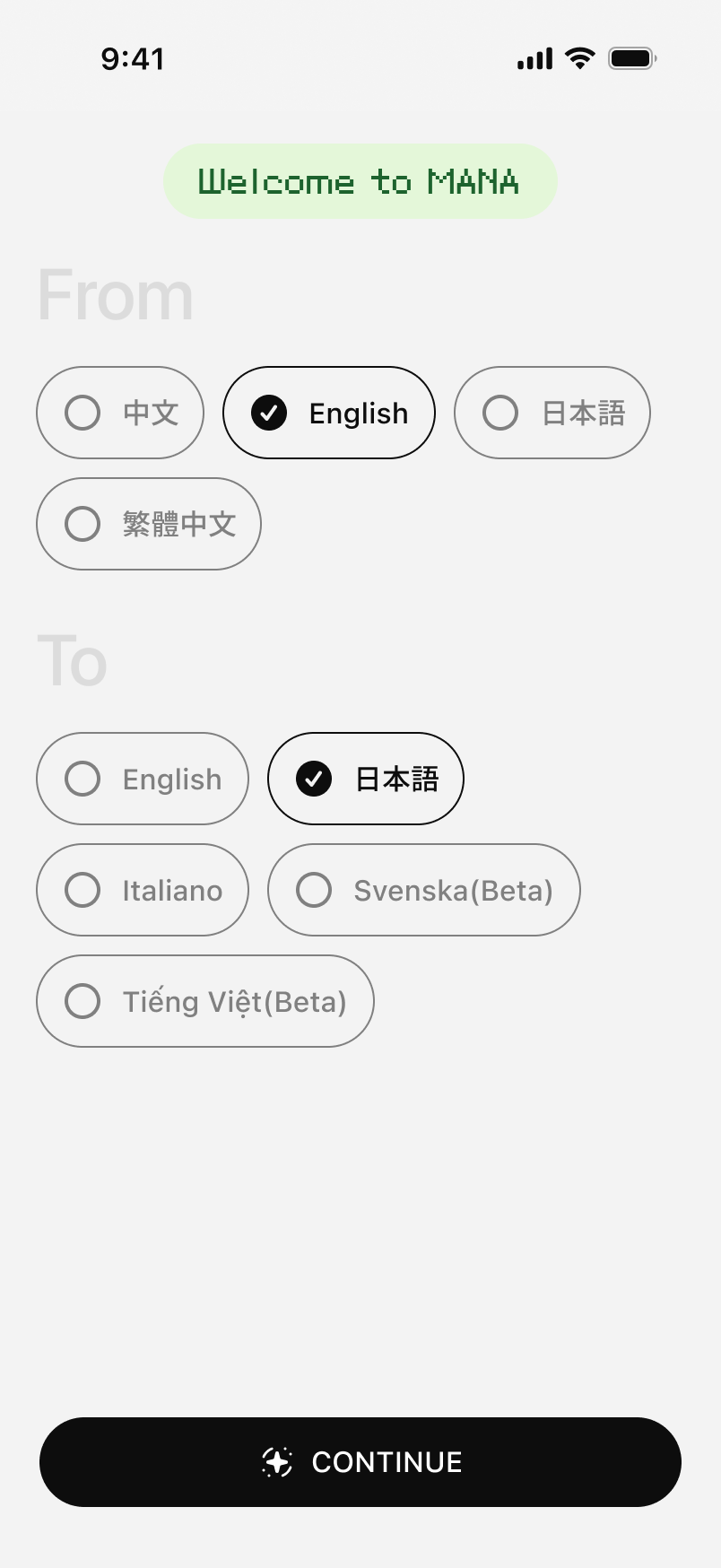
The substantive difference is in how the app adapts. Rather than a fixed curriculum, MANA Learn uses AI to continuously adjust lesson content based on your actual progress — which vocabulary you're retaining, where you're making errors, which CEFR level you're operating at. Sessions are designed for 3 minutes, which removes the "I don't have 30 minutes for a full lesson" barrier that kills streaks for most learners.
The CEFR alignment (A1 through C2) means there's a clear path from beginner through proficiency, not just a point where the app runs out of content and you're on your own.
What MANA Learn doesn't have yet: Babbel's depth of human-curated content for niche contexts (business language, exam prep). Duolingo's social features and leaderboard system if those motivate you. If either of those matters for how you specifically learn, that's worth knowing upfront.
The Direct Comparison: Which One Should You Choose?
Choose Duolingo if: You want a free daily habit-building tool, you're at the complete beginner stage, and streak mechanics actually motivate you to open the app consistently.
Choose Babbel if: You want a structured, grammar-forward course and you're willing to pay a subscription for human-curated content with a clear curriculum arc.
Consider MANA Learn if: You want something completely free that actually adapts to how you learn rather than pushing you through a fixed track — especially if you're past the absolute beginner phase or have been stuck on a plateau with Duolingo or Babbel.
The honest answer for a lot of people reading a "Babbel vs Duolingo" comparison in 2026 is that neither fully addresses what you're looking for. Both were designed before AI personalization was viable at scale. The shift toward AI-native language tools is real, and it's worth evaluating whether the comparison you actually need to make has changed.
Frequently Asked Questions
Is Babbel better than Duolingo for actually learning a language?
For structured grammar learning, Babbel's curriculum is more coherent. For habit-building and motivation, Duolingo's engagement mechanics are effective. Neither adapts to individual learning styles the way AI-powered apps now can.
Is Duolingo or Babbel free?
Duolingo has a free tier with the energy system limitation. Babbel requires a paid subscription to access courses. MANA Learn is completely free with no paid tier.
What's the best free alternative to both Babbel and Duolingo?
MANA Learn offers a free, AI-adaptive curriculum from A1 to C2 with no subscription or hidden costs. It's available on iOS, Android, and web.
Why are people switching away from Duolingo in 2026?
The energy system introduced in late 2025 limits practice for users who make mistakes — the opposite of what beginners need. A major course restructuring in April 2026 also disrupted continuity for long-term users, triggering a visible wave of users looking for alternatives.
Does Babbel have AI features?
Babbel uses AI for its speech recognition exercises and some personalization, but its core curriculum is human-designed and follows a fixed track rather than adapting continuously to individual progress.